With its formidable walls looking down on the former county town of Lancashire, what part did Lancaster Castle play in the English Civil War?
The 17th Century poet and biographer Lucy Hutchinson once said “every county has a civil war, more or less, within itself” – and that is certainly true in Lancashire.
Like many of the regional conflicts that formed the broader conflict, the county was both separate from and a microcosm of the civil war. There was great social and economic tension between the towns, which generally supported Parliament, and the landowning gentry and aristocracy, who controlled the rural areas and mostly supported the King. This was exacerbated by the religious divide, with staunchly Puritan towns pitted against Anglicans and large pockets of Roman Catholics in the surrounding countryside.
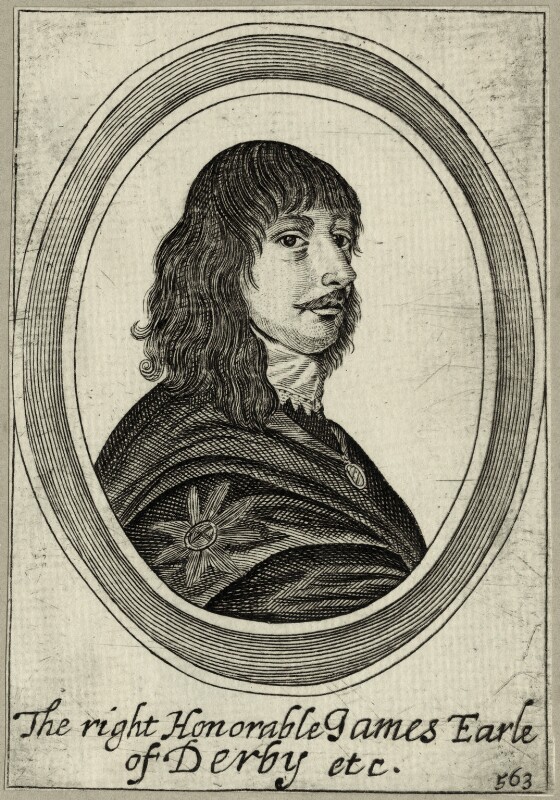
The major Royalist figure in Lancashire, James Stanley 7th Earl of Derby, was slow to secure the county at the start of the civil war in 1642. His best troops were taken by the King to bolster his numbers at the Battle of Edgehill in Warwickshire and never returned, meaning the Royalists were constantly undermanned and unable to stop local Parliamentarian commanders taking key towns such as Preston and Blackburn.
In early 1643, emboldened by their successful defence of Bolton from the Earl of Derby and with the King’s weak forces in the north of the county cut off from the major Royalist towns of Wigan, Lathom, and Warrington, the Parliamentarians of Lancashire decided to size the initiative…
In March, Sergeant Major Birch tentatively approached Lancaster from Preston but found no opposition when they entered the town – the Royalist garrison manning the medieval walls of Lancaster Castle had simply ‘melted away’. This failure to properly secure a strongly fortifiable position was a major mistake for the Royalists – even with a handful of men, the castle could be easily defended and holding it meant north and west Lancashire would always be vulnerable to Parliamentarian forces.
The castle, however, lacked artillery – yet it seemed the Parliamentarians’ prayers were answered when a Spanish ship, the Santa Anna, was wrecked at Rossall (now just north of Blackpool). There followed a desperate race between the Earl of Derby and Sergeant Major Sparrow, a Parliamentarian officer out of Poulton six miles away, to reach the ship and secure its guns. The Earl got there first but, unable to take the cannons with him, he spirited away the women, children, and officers, and burnt the ship to the ground – yet this didn’t stop the Parliamentarians hauling 22 guns out of the wreck.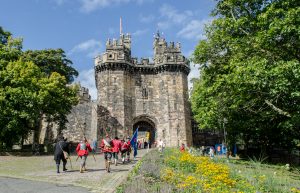
If the Earl was to restore control of the county, he knew Lancaster Castle had to be recaptured. He marched from Wigan at the head of a 1,000-strong force and within 48 hours was at Lytham Hall, where he gathered around 3,000 extra men – those these were mostly poor-quality ‘clubmen’ armed with only farm tools.
On 18 March, the Royalists arrived outside Lancaster and demanded the surrender of the town, which was defended by Sergeant Major Sparrow and four Parliamentarian companies. The town’s mayor apparently replied with ‘so slight an answer’ that the Earl was ‘enraged to see their sauciness’ and ordered his forces to attack. Musket fire poured down on the Royalists and they were forced to seek cover as many of their comrades were killed, though they pressed forward and, setting fire to houses as cover, the Parliamentarians beat a fighting retreat to the safety of the castle. But the cost to the Royalists in men was high.
Now that they had control of the town, the victorious Royalists began looting and killing indiscriminately with ‘all barbarous crueltie’ – even the Earl later admitted that civilians had been killed as the town was plundered and more than 100 houses and barns burned.
Yet no attempt was made to actually take the castle, which Sparrow and his men still held. Word then reached the Royalists that a Parliamentarian relief force had set out from Preston, which forced the Earl to withdraw. While he set off to retake Preston, Lancaster remained in Parliamentarian hands.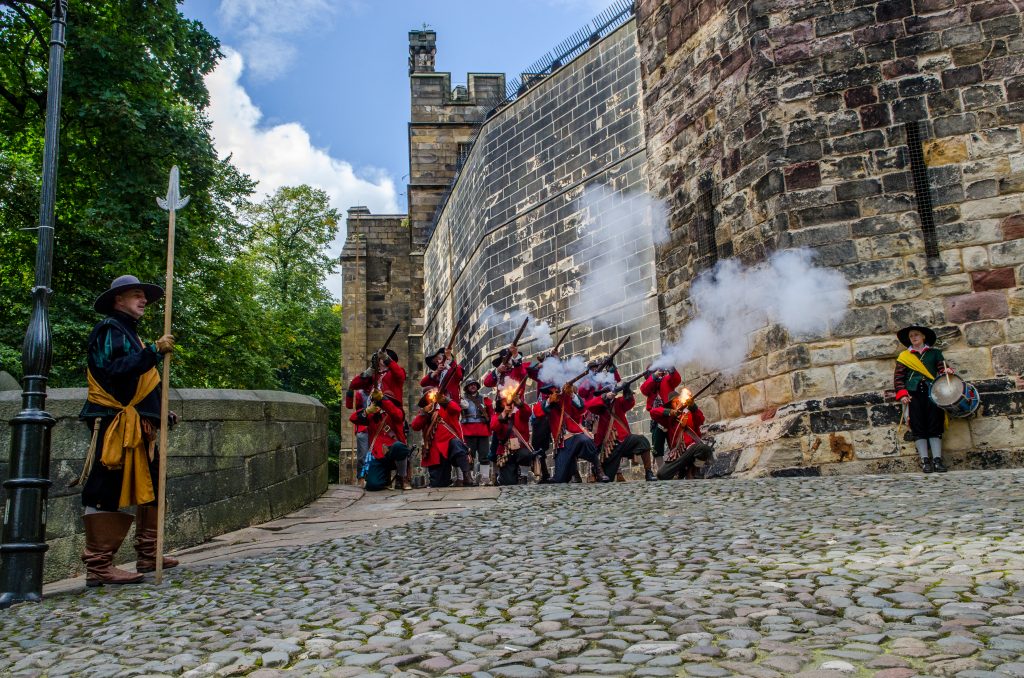
The attack was another huge blunder by the Royalists. In ‘Massacre: The Storming of Bolton’, David Casserly wrote that “this loss of control turned what should have been a victory to a strategic blunder … in the failure to take the castle the Royalists had failed to secure the town and in burning a community that was in many ways in neutral or indeed sympathetic to the King, the Earl had played into the hands of his enemies. The view that the Royalists were lawless, unprincipled robbers who cared little for their friends, never mind their enemies, was burned deep into by the sack of Lancaster.”
Not unlike the later Massacre of Bolton, the attack on Lancaster had been a huge propaganda boost for the Parliamentarians. And although Lancaster would withstand further attacks, it remained in Parliamentarian hands for the rest of the first English Civil War.
Photos of Lancaster Castle used with kind permission of Ruth Lochrie.