“Fit for trading”
Susan Hill, the first wife of Edward Montagu
How the marriage of an inn-keeper’s daughter and a future earl reveals the rich trade in wives and titles in the last days of the court of James VI/I
In 1623, a satirical poem called “Heaven Blesse King James Our Joy” launched a bitter and barbed attack on the family of George Villiers, the first Duke of Buckingham.
This anonymous poem – known as a ‘libel’ – accused Buckingham’s extended family of using his position as the favourite of King James to feather their nests, seeking marriages into noble families while gobbling up land and positions of power and then making off with the loot.1 Its pointed mockery continues across nine stanzas, with the final part beginning with the lines:
“Harke how the wagons crack
With there rich ladinge
Doll comes up with her packe,
Su’s fitt for tradinge.” 2
It is most likely that the “Su” of the fourth line was Buckingham’s cousin, Susan – or Susanna – Hill, who earlier in the year had married Edward, first son and heir of the future Earl of Manchester, Henry Montagu. She came without a dowry, but there were larger prizes at stake for the equally ambitious architects of this marriage: Edward’s father and Susanna’s aunt Mary Villiers, the Countess of Buckingham.

Henry Montagu, Lord Mandeville (left) and Mary Villiers, Countess of Buckingham
Who was Susanna Hill? For the first wife of a future Earl we know relatively little about her. Born in 1595, she was the daughter of John Hill from Honiley in Warwickshire, recorded as being “an inn-keeper”,3 and Dorothy Beaumont, who was a younger sister of the Countess of Buckingham and probably the “Doll” mentioned in the libel. Her father may well have been the same ‘John Hill’ who, along with his brother Thomas, was called to appear before the Chancery in 1596 to answer charges of collusion over a dispute regarding his claim of ownership of tithes (formerly church taxes but now often controlled by local gentry) relating to fields near his own.4
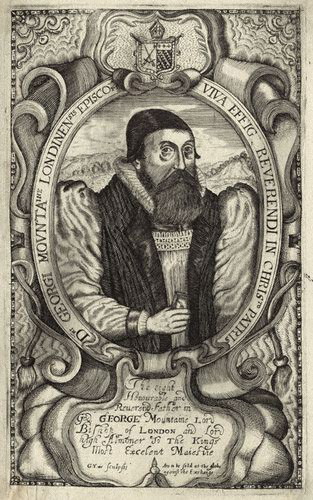
Bishop of London, George Montaigne
Of Susanna’s life before her wedding we know next to nothing, but by the beginning of 1622 it is clear that she was already among the growing number of Buckingham’s relatives at court. Although he really had little interest in religion, Buckingham (at this point a marquess, not yet a duke) had begun to fear – correctly as it turned out – that his mother was planning to convert to Roman Catholicism, with potentially huge consequences for his position and the family.
Although his mother had been Roman Catholic and his wife, Anne of Denmark, had converted, King James was a Protestant and any sympathy he may have had towards Catholics did not survive the discovery of a series of Catholic plots against him, including the Bye and Main plots of 1603 and the Gunpowder Plot in 1605. Like its monarch, England was staunchly Protestant and any Catholics near to the throne were considered with great suspicion.
With his position as the King’s favourite already earning him plenty of enemies, Buckingham enlisted the help of both the future Archbishop of Canterbury, William Laud, and the Bishop of London, George Montaigne, to convince his mother not to convert. On 3 January 1622, he went with his mother, his wife Katherine, his sister Susan, his recently separated sister-in-law Frances, and his friends groom of the bedchamber Edward Wray and assistant master of ceremonies Sir John Finet, to St Paul’s Cathedral5 where Montaigne confirmed them in the Church of England: “before dinner were all confirmed or bishopt as children use to be in his chappell where they had choise musicke and all the ceremonies belonging to that action.”6
Buckingham’s efforts to sway his mother ultimately failed, but among the party at church on that cold day was a “Mistris Hill”, who was undoubtedly Susanna. Was she one of Buckingham’s “numerous and beautiful female kindred” 7 who had already “came in droves to London” 8 to be found rich husbands? Or was this her first taste of her cousin’s life? What is clear is that, despite her connections, by the standards at court her father was not rich – Susanna’s hand came without the all-important dowry.
The life of her fiancé could not have been more different. Edward was still young – 22 or 23 at the time of his marriage – a graduate of Eton and Cambridge, and heir to his recently-enobled father’s newly acquired estate at Kimbolton in Cambridgeshire. He was already active in English political life and well-travelled, as the eldest son of an ambitious Lord President would be expected to be; he was trusted to be part of Viscount Doncaster’s ultimately unsuccessful embassy to Louis XIII in 1621 to plead for the Protestant Huguenots in France,9 and in July 1622 he received a pass to travel with four companions to the Low Countries, probably either as a tourist or as a volunteer in the Dutch army.10 Gossip had it that the groom was “indifferent” to the match,11, but whatever the reality, the marriage proved highly advantageous for him and his father.

Edward Montagu, painted in the 1640s when he had become 2nd Earl of Manchester
Edward and Susanna’s wedding took place on 6 February 1623 in the King’s bedchamber. James was ill in bed when the bridal party, with Edward dressed in “silks and ribbons”,12 marched into his chamber for the ceremony, which was conducted by the Lord Keeper of the Great Seal, John Williams, with the King looking on from among his pillows. As they left the room James, who had apparently taken “great pleasure” in the ceremony,13 threw his shoe after them for luck, which was considered both a compliment and a blessing.
The pair had barely been married before the Duke of Buckingham chose his newest kinsman to join him and the Prince of Wales in Spain as they attempted to woo the Infanta Maria Anna, the daughter of King Philip III. King James had been pursuing the ‘Spanish Match’, which would have sealed an alliance between Protestant England and Catholic Spain, since 1614. Montagu was one of a number of young courtiers who joined the prince in Madrid in April. It has been suggested that the marriage may have been rushed, so that it might take place before the secret journey.14 One this trip, he was probably charged with keeping his father’s hopes for preferment alive, which may have met with some success – rumours that his father would be promoted resurfaced, together with reports that Edward, Lord Kensington and Buckingham’s brother, the Earl of Anglesey, were in contention to succeed the Earl of Kellie as captain of the King’s Guard – but nothing came of any these hopes.15
However, Charles’ grand romantic gesture could not overcome the profound political and religious obstacles in the way of “the Spanish match”. He, and his entourage, returned the following October with little to show for it other than a burning resentment over how they had been treated by the Spanish.
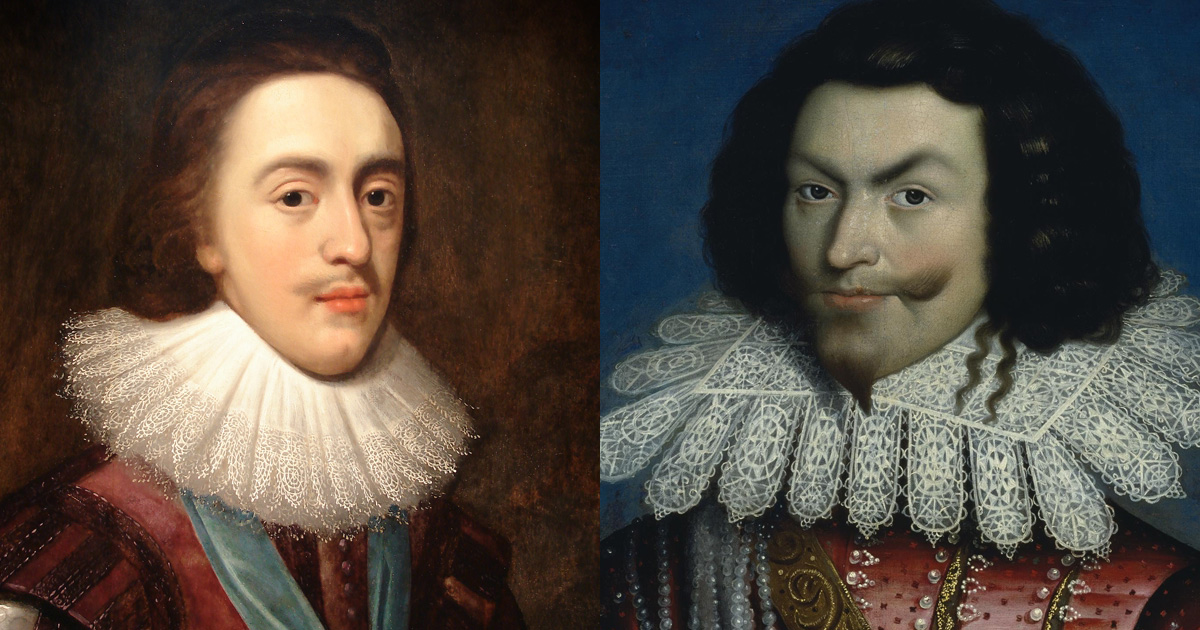
Charles, Prince of Wales, painted in around 1623 (left) and George Villiers, Duke of Buckingham, painted before 1622
Although Charles and Buckingham’s attempt was unsuccessful, the mission nonetheless provides us with a solitary example of young Susanna’s voice. Abandoned by her new husband within weeks of their wedding, mourning his absence, and responding to rumours that he would soon return overland via France, Susan wrote to Edward with an intimate affection that may suggest the gossips’ claims that he was cool towards his marriage were wide of the mark; she refers to him as her “sweeting” and says that she dislikes retiring for the night due to his absence from their bed.
“Susan Montagu ‘to my dear husband, Mr. Edward Montagu.’
Sweet heart, I am afraid I shall weary your eyes with reading my tedious scribblements, but my hope is that you will not stay so long as to receive any more, which makes me write the more liberally now. I have no news to send you but that I am as much with child as my Lady Duchess or my Lady Denbigh for neither of them both are. My Lady Duchess hath been very ill, but now well again, but do not speak of it to my Lord Duke. All your friends here do bid me be confident of your speedy return, and I am apt to believe them, because I would fain have it so. I have been told you were a coming in France by many, and it was all over the town, which news was not welcome to me; but if you be not here the sooner, many of your friends will be undone by losing of wagers, as Mr. Herbert, Captain Fisher, and many others; but I am sure you are so kind to your friends, that you will not suffer them to lose by you; but if you come, I am like to be the greatest winner. So being very late, as a matter of ten o’clock, I bid you good night, going into the little bed, which I find less than ever it was, and never have no mind to go into it, because I cannot find my sweeting there. But when I am there, I sleep as little as may be, for I am still riding post to Madrid, which I hope doth presage that you will shortly post from there, and come to the little chamber again, which I truly pray for; so, dear heart, farewell. Your truly loving wife, Su. Montagu.” 16
In just a few lines you get a remarkably vivid sense of Susan’s personality – one of her husband’s descendants later described her as “lively” 17 – and, whatever the emotions of her partner, you can clearly hear the voice of a young, sweet woman, newly married and very clearly in love. Surrounded by the latest gossip about the Prince of Wales’ ill-fated mission, she watches Edward’s friends place bets on him returning quickly – possibly as a way of buoying her spirits – but playfully suggests she would actually be “the greatest winner” should he do so.
There is a school of thought which suggests that modern notions of love and relationships cannot be projected onto the past, when social values were very different. However, while social conventions vary from age to age, the human condition does not. This is not a grand love letter, written to impress or to woo, and full of social constructs – it is a dashed off note, written quickly at 10 o’clock at night with almost the quality of a diary entry. This means it is far more revealing about its author and her feelings than any well-worded sonnet.
However, while Susanna’s feelings towards Edward show the writer of “Heaven Blesse King James Our Joy” was cynical, they do not overcome the fact that they were right – this was an arranged marriage, one that represented a trade off by two powerful figures in the Jacobean court. By 1621, Edward’s marriage prospects had become of prime concern to his father. Eligible and “handsome” 18 Edward had already been suggested as a match for the daughter of William Feilding, Earl of Denbigh and Buckingham’s brother-in-law, while the Lord Mayor of London, William Craven, had offered a dowry of £25,000 for his eldest daughter, Elizabeth.19
So why did Baron Montagu instead pick dowry-less Susanna?
By this point, the Duke of Buckingham had completed his ascendency as favourite to King James20 (in 1618, even James himself wryly quipped that advancing the Villiers family was his only reason for being21) and his mother had established a “flourishing marriage market”22 as she sought to “provide wealthy husbands for her ‘numerous and beautiful female kindred’”23. Wags mocked her “special work of charity” in providing for these women, and joked that “six or seven more (they say) come lately to town for the same purpose”,24 while the 1623 libel paints the image of the family’s wagons making off while loaded with loot, a metaphor for an uncouth smash and grab by avaricious social climbers, a pointed comment full of class snobbery and disdain. However, despite the gossips’ barbs, the Countess was not the sole Machiavelli here – Buckingham also “cheerfully accepted the obligation to promote the interests of all his kindred, no matter how distant the relationship” 25 and the support of this “title-monger” 26 for those who helped him “displayed the reciprocity expected between patron and client and among relatives and political friends”27 and several great men fell prey to the Villiers’ rapacious need for fresh positions to bestow on their allies.
Henry Montagu was well aware of this fact. As Lord Chief Justice, he had watched as Lord Chancellor Francis Bacon had fallen foul of the powerful Villiers clan by refusing to surrender a property the Countess of Buckingham coveted, and was removed from office – a prosecution for corruption that very nearly claimed Montagu as well. Then, in 1620, he paid £20,000 – the equivalent of £2.6million today28 – to Buckingham in order to become Lord High Treasurer of England. Locked in a bidding war with the chancellor of the Exchequer, Fulke Greville, Montagu was apparently “resolute not to exceed” £20,000 but this offer, coupled with the support of Buckingham’s wife, did the trick.29 During his impeachment in 1626 Buckingham insiated that the money was not a bribe but rather a “loan” to the King – yet Montagu’s later letters suggest otherwise.30 When the newly-appointed Montagu, now also ennobled as Baron Kimbolton and Viscount Mandeville, was en route to meet the King at Newmarket he stopped to collect the Treasurer’s white staff of office from the disgraced Bacon, who drily quipped “Take care, my lord, wood is dearer at Newmarket than in any other place in England”.31
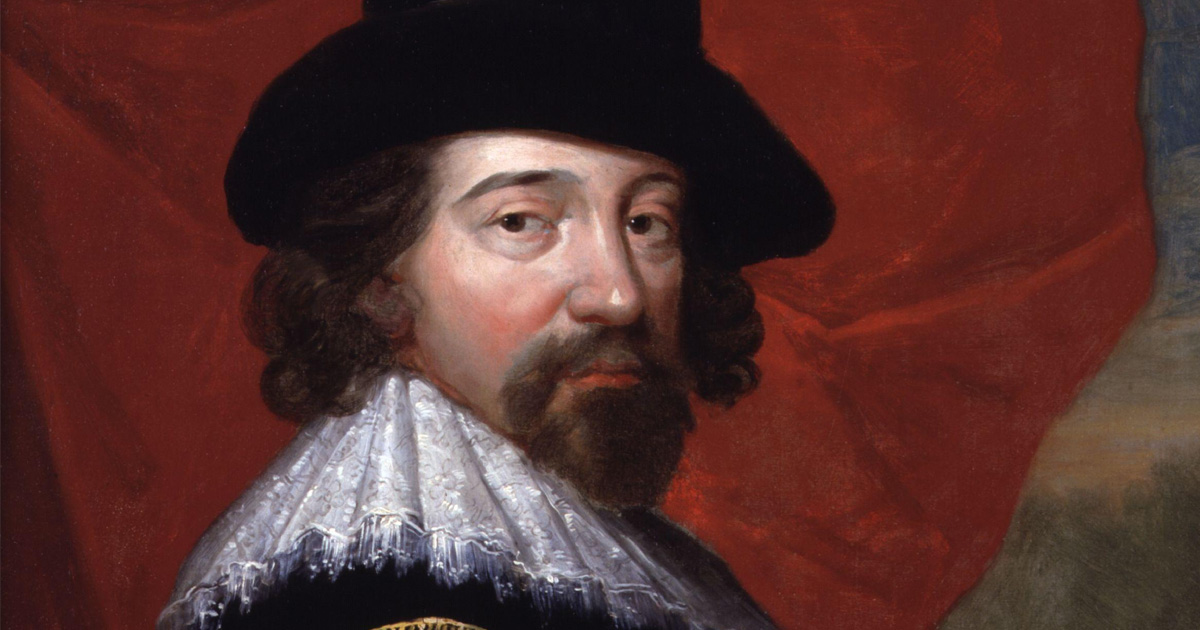
Francis Bacon
Sure enough, in less than a year Montagu was pressured into giving up his costly new position to Sir Lionel Cranfield, whom the Countess was lining up to marry one of her cousins. To soften the fall, the redundant office of Lord President of the Council was revived for Montagu. He unironically complained to Bacon about his treatment at the hands of the Villiers and how his new position brought little financial compensation. The quick-witted Bacon replied “My lord, they have made me an example, and you a president!” 32 Now severely out of pocket, Montagu asked for his money back. Neither Buckingham nor the King had the ready cash and so Villiers gave Montagu some of his own manors in Herefordshire as security.
But the Villiers were not done with Henry Montagu. Success in the Jacobean court was an expensive business and this applied even more so to the King’s favourite – Buckingham was coming under enormous financial pressure and turned to Montagu for help, with the Lord President willingly lending him the hefty sum of £10,000 33. Now in debt to Montagu, the Villiers spied the chance to seal a stronger alliance with another of England’s rising grandees.34 The Countess had apparently already selected Edward as a suitable match for her niece, Susanna,35 and the promise of the repayment of the £10,000 was made contingent on Lord Mandeville’s consent to the marriage.
And so her cousin’s debt became Susanna’s dowry. On their wedding day, Buckingham paid the couple £10,000, securing Edward’s father the return of his money and, more importantly, closer ties to the Villiers with all the protection and proferement that such an alliance would provide. Buckingham also promised to promote Montagu, provide him with ten dishes at court and, it was rumoured, an extra £5,000.36 Arranged marriages were common for the time, but the bargaining over this marriage had been sufficiently brazen that it attracted the eye of satirists. Susanna’s marriage had been arranged, a bargain had been struck, and she had – as the words of the libel suggested – been “traded”. She went from being “one of the many penniless young ladies of Buckingham’s kindred” 37 to dining with ladies, being confirmed by a bishop, and marrying a future Earl. Her aunt’s mercenary behaviour may not have been quite as ruthless as some accounts would have us believe, but this intersection of money, advancement, and politics can still seem shocking to modern eyes. Montagu probably still entertained hopes that this exchange would see him soon back in the lucrative Lord Treasurer’s position, but it was not to be and he remained Lord President for another six years. Although Edward will no doubt have promoted his father’s case during his time in Spain,38 it wasn’t until June 1625 that the crown at last gave Montagu his £20,000 non-bribe back39 and not until the coronation of Charles in 1626 that he received the kind of advancement he craved: he was made the first Earl of Manchester and rose to be one of Charles’ most trusted advisors, while his son became a Knight of the Bath.40
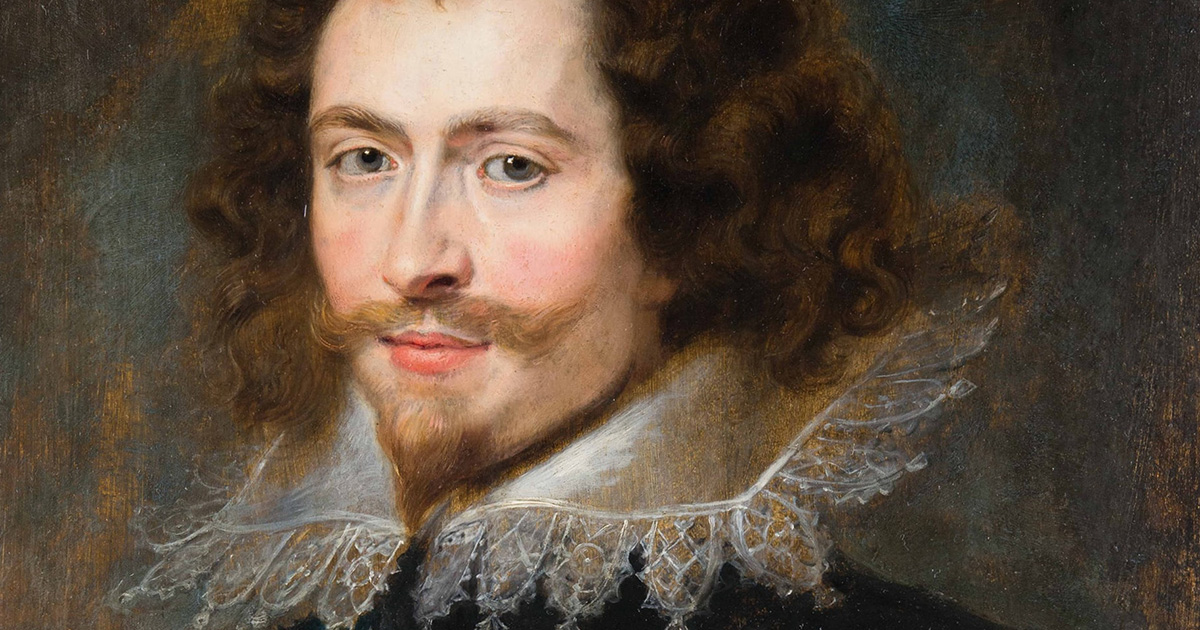
George Villiers, the Marquess of Buckingham, painted in 1625
Even before their wedding day, Edward and Susanna’s marriage had been eventful. In the end, it also proved to be short. Susanna died at the beginning of January 1625, at the age of 29.41 There is no record of the cause of her death but it quite probably related to childbirth.42 In her letter of 1623 she had complained to her new husband that she was not expecting and, with pregnancy a risky prospect in the 17th Century, the quick production of an heir would have been foremost on the couple’s minds.
At least one contemporary source claims that she left him a baby daughter,43 though if this is true then it is likely that the child did not survive long, as there are no records of a baptism and other sources list the marriage as childless.
Days later, Buckingham wrote to Edward to assure him that his wife’s death would not sever the ties of patronage that their marriage had forged:
“The Duke of Buckingham to Edward Montagu.
Wallingford House: the 24th January, 1624.44
Cousin, I am exceedingly sorry for the loss which we have both received, which though nothing can repair, yet I shall be glad to give you any comfort I can, and I desire you to believe that howsoever she whom God hath taken was the means to make the tie of my love the stronger toward you, yet the loss of her shall never diminish it, but I will rather study to express how much I loved her, by settling it in a greater measure upon you, whose own person was so great an attraction of mine affection that I will ever be ready to take any occasion to show how much I esteem you, and ever rest,
Your very loving kinsman and servant,
BUCKINGHAM.” 45
The alliance that Edward’s father had pursued and purchased survived the death of Susanna but not Edward’s second marriage. Less than seven months after his first wife’s passing, Edward wed Anne, the 21-year-old daughter of the powerful Robert Rich, 2nd Earl of Warwick. A staunch Puritan, Essex possessed no love for the Villiers and, thanks to his new relations, Edward’s reputation with the court cooled. It was the beginning of a journey that would see him one day take up arms against the crown to which his father and many of his closest family remained loyal.
In many respects, the writer of “Heaven Blesse King James Our Joy” had been correct – Susanna had been traded, her hand bartered in a straight exchange for money owed. She, and a number of her relatives, seem to have been little more than pawns in Buckingham and his mother’s efforts to affix their family to the heart of the English state.
But maybe there was something the satirist either ignored or had been ignorant of – it may have been an arranged marriage, it may have been a deal struck between families looking for financial advantage, it may have been a rushed affair conducted in the bedroom of a sick king, but we can see in her own words that young Susanna was very much in love.
Her letter to her absent husband, the touching words of a new wife awaiting the return of her “sweeting”, is proof of that.
Michael Molcher

Bibliography
Francis Bacon, The Works of Francis Bacon, Volume 7, p181 (Cambridge University Press, 2011)
Paul Christianson, Politics, Patronage, and Conceptions of Governance in Early Stuart England: The Duke of Buckingham and His Supporters in the Parliament of 1628 (Huntington Library Quarterly, Vol. 60, No. 3, The Remapping of English Political History, 1500-1640 (1997))
Thomas Fuller, The History of the Worthies of England Vol.2 (T. Tegg, 1840)
Samuel Rawson Gardiner, History of England from the Accession of James I to the Outbreak of the Civil War, 1603–1642 (Cambridge University Press, 2012)
Simon Healy, MONTAGU, Edward (c.1602-1671), of Kimbolton Castle, Hunts.; later of Manchester House, Westminster, published in The History of Parliament: the House of Commons 1604-1629, ed. Andrew Thrush and John P. Ferris (Cambridge University Press, 2010)
Roger Lockyer, Buckingham: The Life and Political Career of George Villiers, First Duck of Buckingham 1592-1628 (Longman, 1981)
Brian Masters, The Dukes (Pimlico, 2001)
Andrew McRae, Verse Libel: Popular Satire in Early Modern England in Subversion and Scurrility: Popular Discourse in Europe from 1500 to the Present ed. Tim Kirk (Routledge, 2016)
William Drogo Montagu, Court and Society from Elizabeth to Anne Volume 1 (Hurst and Blackett, 1864)
Ruth Paley, The House of Lords 1660-1715 Vol.3 (Cambridge University Press, 2016)
Katherine Thomson, The life and times of George Villiers, Duke of Buckingham (Hurst and Blackett, 1860)
D.H. Wilson, James VI and I (Jonathan Cape, 1956)
Please address all comments/corrections to earlofmanchesterspr@gmail.com
 Footnotes
-
Andrew McRae, Verse Libel: Popular Satire in Early Modern England in Subversion and Scurrility: Popular Discourse in Europe from 1500 to the Present ed. Tim Kirk (Routledge, 2016)
- Early Stuart Libels
- Ruth Paley, The House of Lords 1660-1715 Vol.3 (Cambridge University Press, 2016) p860
- National Archives
- Roger Lockyer, Buckingham: The Life and Political Career of George Villiers, First Duke of Buckingham 1592-1628 (Longman, 1981), p115
- John Chamberlain, The Letters of John Chamberlain, Vol.2, ed. Norman Egbert McClure (American Philosophical Society, 1939) p419 (Accessed via Hathi Trust Digital Library)
- Thomas Fuller, The History of the Worthies of England Vol.2 (T. Tegg, 1840) p232
- D.H. Wilson, James VI and I (Jonathan Cape, 1956)
- Simon Healy, MONTAGU, Edward (c.1602-1671), of Kimbolton Castle, Hunts.; later of Manchester House, Westminster, published in The History of Parliament: the House of Commons 1604-1629, ed. Andrew Thrush and John P. Ferris (Cambridge University Press, 2010)
- Acts of the Privy Council of England Volume 38, 1621-1623 (His Majesty’s Stationery Office, London, 1932) p287
- Charles I – volume 138: March 1-17, 1629 #23 from Calendar of State Papers Domestic: Charles I, 1628-29 (Her Majesty’s Stationery Office, London, 1859)
- William Drogo Montagu, Court and Society from Elizabeth to Anne, Volume 1 (Hurst and Blackett, 1864) p314
- Chamberlain, p476
- Katherine Thomson, The life and times of George Villiers, Duke of Buckingham (Hurst and Blackett, 1860) p330
- Healey
- Montagu, p314
- Montagu, p315
- Montagu, p312
- Charles I – volume 138: March 1-17, 1629 #23 from Calendar of State Papers Domestic: Charles I, 1628-29 (Her Majesty’s Stationery Office, London, 1859)
- G.E. Aylmer, The King’s Servants: The Civil Service of Charles I 1625-1642 (Routledge & Megan Paul, 1974) p344
- JP Kenyon, The Stuarts (Fontana, 1966) p.55
- JP Kenyon, The Stuarts (Fontana, 1966) p.55
- Wilson
- Samuel Rawson Gardiner, History of England from the Accession of James I to the Outbreak of the Civil War, 1603–1642 (Cambridge University Press, 2012) p24
- Lockyer, p69
- Lockyer, p54
- Paul Christianson, Politics, Patronage, and Conceptions of Governance in Early Stuart England: The Duke of Buckingham and His Supporters in the Parliament of 1628 (Huntington Library Quarterly, Vol. 60, No. 3, The Remapping of English Political History, 1500-1640 (1997), pp. 289-302)
- The National Archives, Currency Converter 1270-2017
- Andrew Thrush, MONTAGU, Sir Henry (bef. 1567-1642) from The History of Parliament: the House of Commons 1604-1629, ed. Andrew Thrush and John P. Ferris, 2010
- Gardiner, p24
- Gardiner, p24
- Francis Bacon, The Works of Francis Bacon, Volume 7, p181 (Cambridge University Press, 2011)
- Thompson, p146
- Thompson, p146
- Montagu, p312
- Thompson, p146
- Samuel Rawson Gardiner, A Student’s History of England, Vol.2 1509-1689 (Project Gutenberg, 2012), p414
- Pealey
- Lockyer p67-8
- Brian Masters, The Dukes (Pimlico, 2001) p337
- Manchester, Earl of (E, 1625/6), Cracroft’s Peerage
- Healey
- Chamberlain, p599
- The date of Buckingham’s letter conforms to the old Julian calendar, which marks New Year on 25 March rather than 1 January.
- Montagu, p324