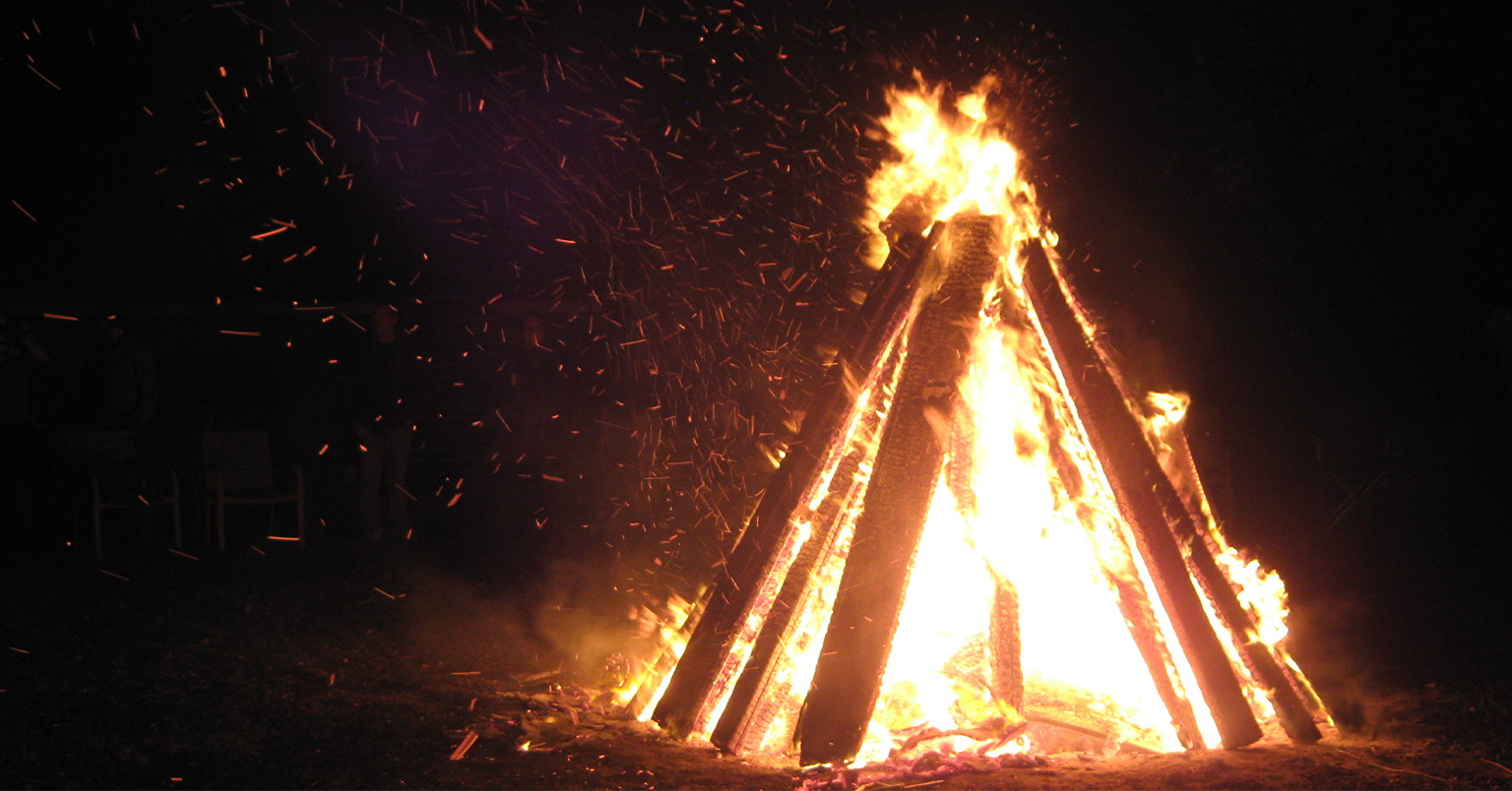
Bonfires, fireworks, music, celebrations – these are the hallmarks of a fun Bonfire Night, held every fifth of November (or, more conveniently, the nearest Saturday) to mark the foiling of the infamous Gunpowder Plot to blow up Parliament in 1605. And, with them, comes the traditional rhyme:
Remember, remember, the 5th of November,
Gunpowder, treason and plot.
I see no reason
Why gunpowder treason
Should ever be forgot.
But in 1623, a different mnemonic met bonfires and wild celebrations in the streets:
On the 5th October
It will be treason to be sober
But why would England be celebrating the fifth of October?
The celebrations and bonfires marking the discovery of the ‘Gunpowder Plot’ led by Robert Catesby had already become well established, having become ‘Bonfire Night’ thanks to Northamptonshire MP Sir Edward Montagu (the uncle of the Edward Montagu whose English Civil War regiment we reenact).
Yet in 1623, churchbells were rung, bonfires were lit, and street celebrations were held not to mark the deliverance of King James … but that of his son from different kind of Catholic ‘plot’.
 Throughout the 1610s and ’20s, King James trod a difficult path between familial obligation, religious conviction, and political reality. On the Continent, the cataclism that would become known as The Thirty Years’ War erupted in 1618. One of the most destructive conflicts in European history, one of the main drivers was the expansion of Protestantism and its implicit challenge to the Holy Roman Empire, and the dominant Catholic states of Spain, Austria, and France.
Within this, the minor power of England had to tread a delicate path. Although Protestant since Henry VIII’s Reformation, it’s brand of Protestantism was relatively moderate and the country still possessed a small but significant Catholic minority. Its new King, however, was also monarch of the staunchly Calvinist state of Scotland. Many south of the border wished to see the English church take on their neighbours’ brand of austere and anti-episcopal ‘Presbyterianism’.

The Elector of Palatine Frederick V by Gerrit van Honthorst
James also had a personal stake in the conflict in Europe – his son-in-law was at the centre of it. The war had begun when the Protestant Czech nobility of Bohemia rebelled against their Catholic king, Ferdinand II. As Elector Palatine of the Rhine in the Holy Roman Empire and the leader of the Protestant Union – a military alliance founded by his father – Frederick was asked to become King of Bohemia, and he agreed.
Frederick hoped for the support of his father-in-law, but James opposed his son-in-law’s takeover of Bohemia and failed to support him militarily and Frederick’s reign lasted just a year and four days.
Part of James’ reluctance was because he was seeking a Spanish bride for his son and heir, Prince Charles. Negotiations began in 1614, but quickly became closely intertwined with British foreign and religious policy.
The negotiations were deeply unpopular – especially in a House of Commons dominated by many hardcore Puritans – and many feared the influence of the Catholic Spanish. Spain and France were England’s long-standing enemies, the tyranny of England’s last Catholic monarch ‘Bloody’ Queen Mary was barely out of living memory, and many looked at the defeat of the Spanish Armada and the derring do of adventurer-privateers like Sir Walter Raleigh (who James executed in 1618) as emblematic of now-faded English glory.
Spain’s proposal of a marriage alliance came with a dowry of £500,000 – something especially attractive to James, who could not get Parliament to provide him with the financial subsidies he needed. But the Spanish were playing the long game, promising marriage for the return of Frederick’s kingdom to the desperate and cash-strapped James – they wanted concessions for English Catholics, which they knew James was unable to grant.
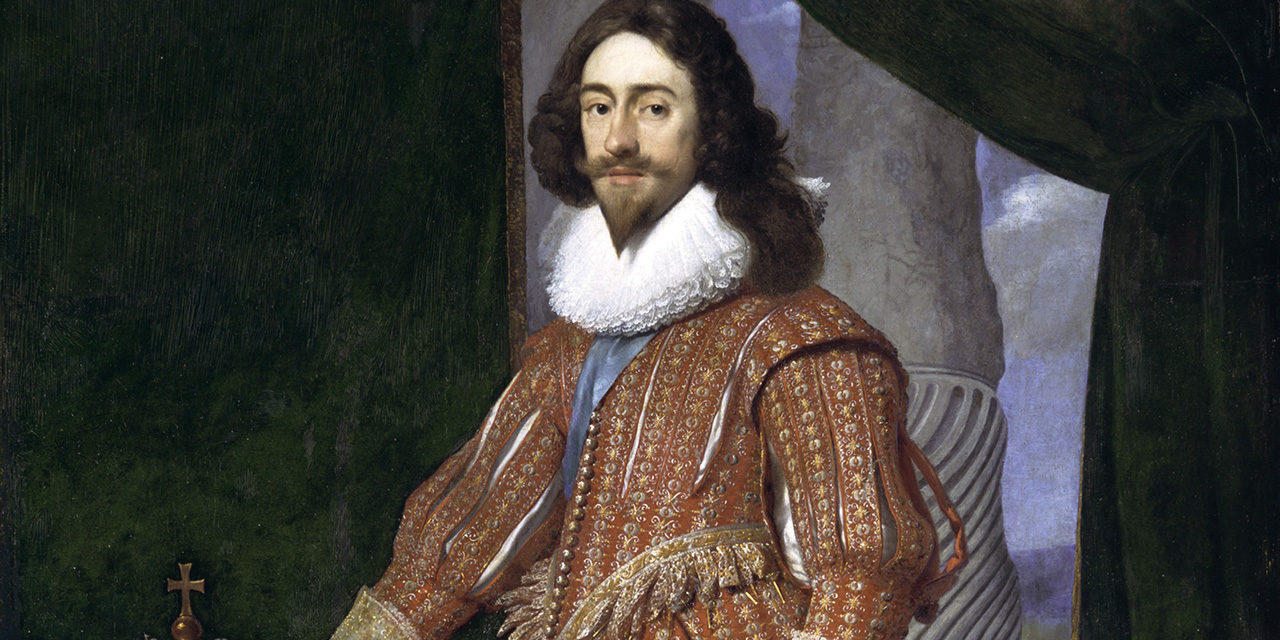
Charles I by Daniel Mijtens (1629)
While the machinations of state ground away in London and Madrid, on 5 October 1623 a Godalming innkeeper named Wiat had become suspicious about two of his patrons. These were not thirsty travellers, but Prince Charles and the King’s favourite, George Villiers, the Duke of Buckingham – on their way back from Spain and the ill-fated mission to woo Charles’ promised bride.
Treated poorly and cooly by the Spanish, as well as misjudging his behaviour at the court in Madrid, Charles soured on the match. Despite taking an oath committing himself to the marriage, Charles had already decided to leave without her. Three weeks later, he and Buckingham
set sail from Santander to England. The news of their landing at Portsmouth, on 5 October, was the cause of general rejoicing; the blessed prince had been rescued from the jaws of the dragon. He had escaped the wiles of the harlot of Rome. Spain would no longer be able to command the councils of the king. When Charles crossed the Thames he was greeted with carillons of bells; the wealthy laid out tables of food and wine in the streets; debtors were released from prison and felons rescued from death. It was a day of rain and storm yet one contemporary counted 335 bonfires between Whitehall and Temple Bar; 108 bonfires were lit between St Paul’s and London Bridge alone. A contemporary ballad set the tone:
The news of the failed Spanish alliance preceded them – and London went wild. The Protestant prince had returned unmarried and the threat of Catholic tyranny had been once again been averted. Bells rang out all over London. Edward Hyde, 1st Earl of Clarendon, described the scenes as “the loudest and most universal over the whole kingdom that the nation had ever been acquainted with”. Spontaneous street parties erupted, Cambridge University decreed extra rations for the undergraduates, condemned prisoners were released by order of the Privy Council, and bonfires were lit all over the city – 335 in the mile between Whitehall and Temple Bar, 108 bonfires St Paul’s and London Bridge alone.
A contemporary ballad captured the mood:
The Catholic king hath a little young thing
Called Donna Maria his sister,
Our prince went to Spain her love to obtain,
But yet by good luck he hath missed her.
A shorter rhyme was also carried from street to street:
On the fifth day of October,
It will be treason to be sober.
Bishop William Laud noted in his diary that he witnessed “the greatest expression of joy by all sorts of people that I ever saw”.
Apparently misjudging events yet again, Charles seemed to believe that the crowds were celebrating his deliverance, leaning out of his mobbed coach “with his hat in hand and [giving] thanks to them all for their love”. In reality, the celebrations marked a change in national politics that Charles would eventually come to rue – politics was becoming increasingly polarised. The Spanish were the enemy, both religiously and politically. James’ attempts to ally with them, rather than support his Protestant son-in-law, meant that his decisions in the future would be seen by his opponents to be in bad faith.
The clamour for war with Spain and the bubbling anxieties and stresses in English political and economic life would, eventually, see Buckingham murdered and his friend, Charles, beheaded after the country fell to civil war.
But, for a brief moment, Guy Fawkes Night was eclipsed by the biggest street party the country had seen for years.
For more detail on the story of the Spanish Match, Charles and Buckingham’s covert mission to Madrid, and the aftermath, the Early Stuart England has some great episodes on the reason for the 5th October celebrations…
In the spring of 1623, Prince Charles and the Duke of Buckingham arrive in Madrid:
Prince Charles and the Duke of Buckingham plot to return home from Madrid, by any means necessary: