Today – November 20th – is ‘Equal Pay Day’ in the UK.
This is the day when, because of the gap between the average man’s salary, and the average woman’s salary, overall women stop being paid in comparison to men. To put it a different way: thanks to the gender pay gap, women effectively work for free for the last 42 days of the year.
The gender pay gap is the difference between the average (mean) hourly pay of men and women, and is influenced by many factors including occupational and sectoral segregation, access to higher education, the unequal impact of parental leave and childcare responsibilities, and the impact of women taking on more unpaid care work as they age. This year, the Office of National Statistics calculates it to be 11.3% – an increase from last year where it was 10.3%. That means the gap has widened for the first time since 2013.
The pay gap varies widely between populations, sectors and even geographical locations – I work in academia, where the pay gap is wider than the national average, and actually increases as roles get more skilled. As part of my job I analyse and try to interpret the pay gap data, seeking to understand and share understanding as to the reasons for the current gap, and how we can reduce it – removing barriers, increasing options for flexible work and flexible progression, and increasing support for people with caring responsibilities. The gap is reducing slowly, but the Fawcett Society projected that, at current rates, the overall UK pay gap will not close until 2051.
This gap is something that would have been very recognisable to women in early modern England. Indeed, the gender pay gap is something that is firmly rooted in our past.
In their book Women in Early Modern England, 1550 – 1720, Sara Mendelson and Patricia Crawford state “it was an economic axiom that female workers should be paid no more than one-half to two-thirds as much as males for comparable work”.
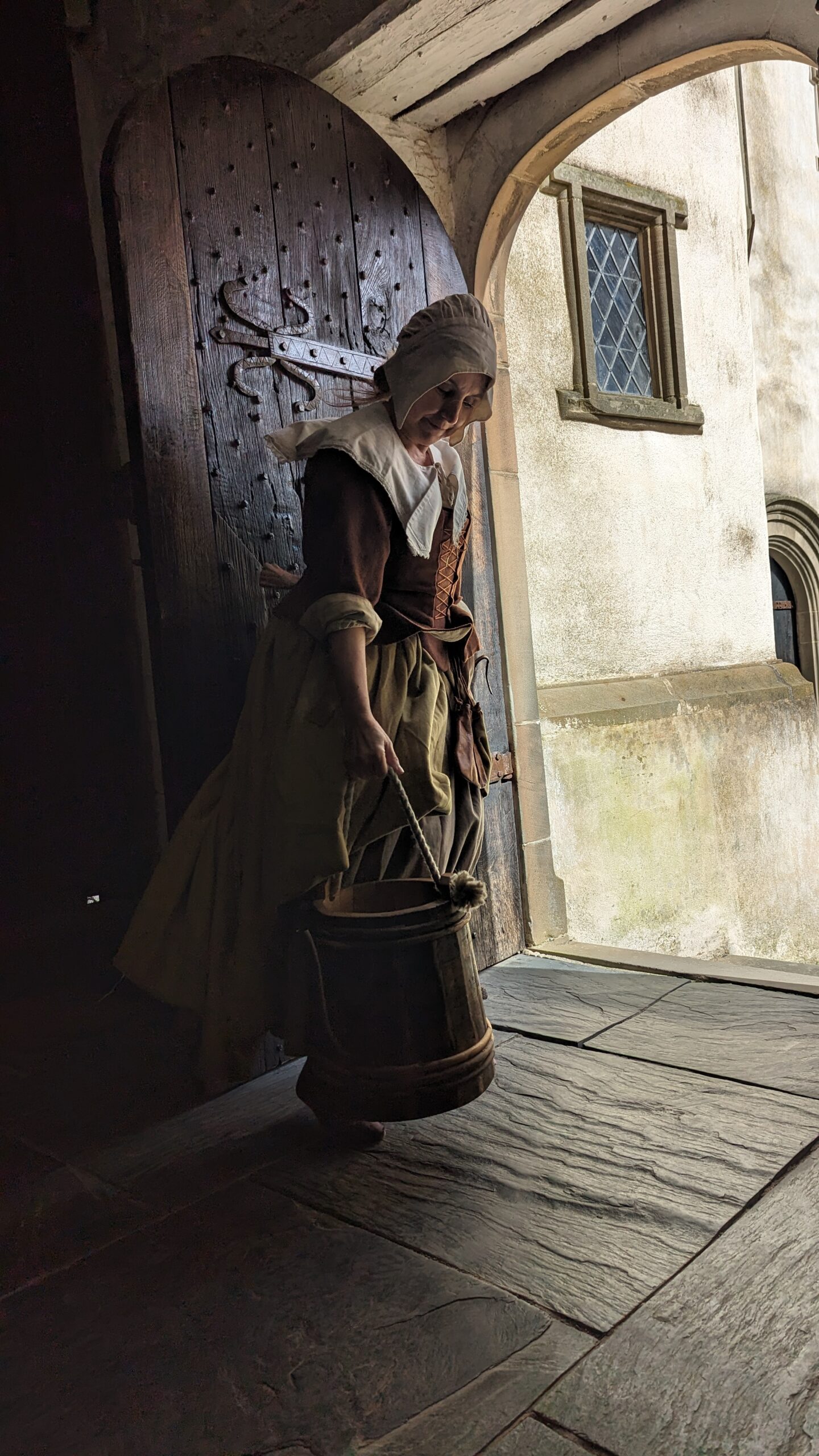

In her doctoral research, Imogene Dudley of the University of Exeter focused on women’s work in the south-west of England from 1500 to 1700, looking at household account books to explore the gender division of labour, and the effect of the life-cycle on women’s work and wages. Dudley takes Mendelson and Crawford’s work a step further by examining some specific case studies across hundreds of records to draw out the lived reality of common folk engaging in work.
One prime example are the accounts of the family of Dame Philippa Gore, from the village of Barrow Gurney, near Bristol. The Gores were a large employer in their village and within their records the gap in pay between genders is evident – male labourers were paid 12 pence for a day of work, while women were paid almost half of that amount: 6.1 pence. Dudley cites Henry Collins, who in June 1666 was paid 12 pence a day for four days of unspecified labour – exactly double what Jane Councell received. On the Chipley estate in Somerset in the late 1670s, future MP Edward Clarke paid men an average of 12 pence a day to men and 3.06 pence to women.
While the specifics of the work undertaken are not included in the records, across all accounts women and men’s work was recorded as being the same in duration and activity – only their gender and pay varied. This was repeated again and again across the hundreds of accounts that Dudley scrutinised.
These accounts amount to an incredible gender pay gap of between 49.2% and a whopping 76.5%. If Equal Pay Day had been a thing in the mid 17th Century, these women would essentially have been working for free from at least around lunchtime on the 28th of June.
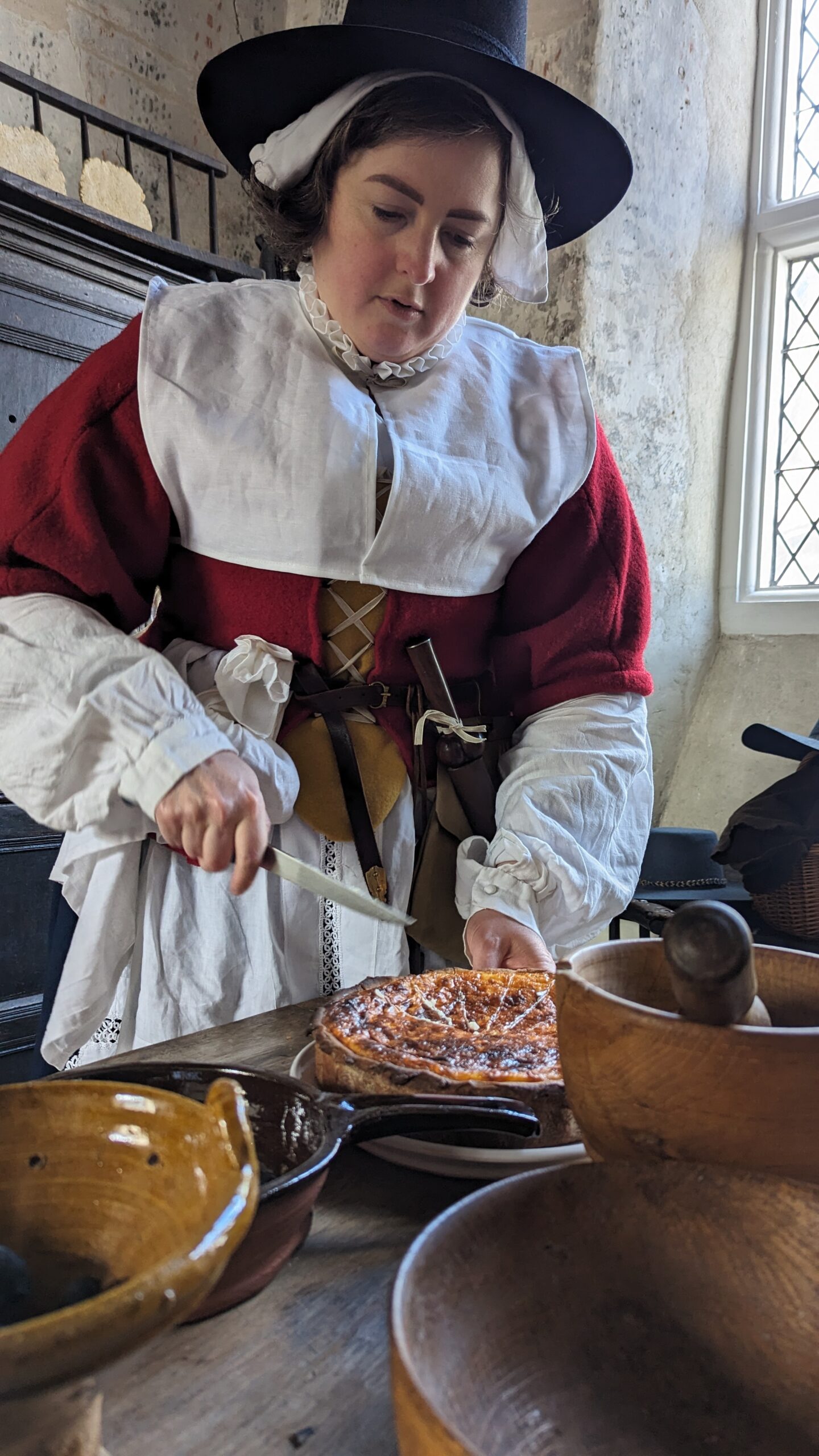

Women’s work in the period was primarily focused on the maintenance of the household, but this covered a huge range of different tasks, from cleaning floors to spinning wool, from cooking and brewing to feeding cattle and repairing clothes. ‘Women’s work then (and to a large extent now) was the jobs which get done all the time and are not therefore worthy of comment, like housework, or the things which need to be done in an emergency or seasonally,’ wrote Anne Laurence in Women in England 1500-1760: A Social History.
This was in marked contrast to the work of men. ‘The division of labour between the sexes was efficient and inequitable,’ wrote Mary Prior in Women in English Society 1500-1800. ‘The reality of work was…divided into two parts. What men did was definite, well-defined, limited [and] what the women did was everything else.’
It also meant that there was a disparity not just in wages but in time, too. ‘Women’s days were filled from beginning to end with tasks concerned with the welfare of their families, but not classed as employment,’ adds Laurence. ‘Men’s work, being clearly demarcated, began and ended at certain times, and allowed them leisure.’
It’s important to remember that these examples are looking at limited accounts; the reasons and factors impacting on the day-to-day life for the average working person, particularly women in the early modern period, are far too complex to detail in a single post.
However, as we make progress on the equal pay agenda in the 21st Century, and hope to see incremental change each year along with improvements in working environments, education, access and progression, please spare a thought for our early modern sisters – and take a moment today to consider the progress we have made, and the road to come.
Katherine Corr

Data and interpretation from Imogene Dudley (University of Exeter). Photos by Michael Molcher and John Beardsworth.