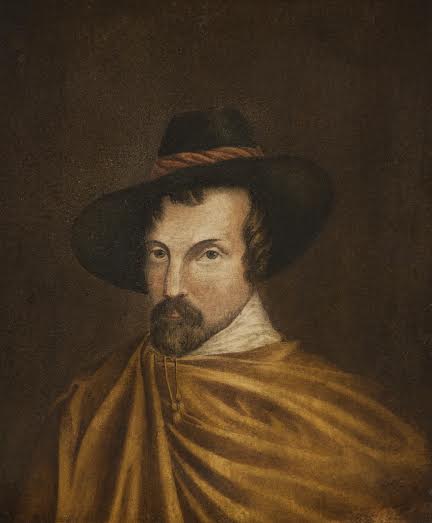
William Brereton
The Parliamentarian commanders for Yorkshire, Sir Thomas Fairfax and his father Lord Ferdinando Fairfax, had had mixed fortunes since the war began in 1642. The father and son, whose ancestral home was just outside Otley in Yorkshire, had initially secured the area in their campaign against the Marquis of Newcastle, whose Royalists forces threatened from the north. But there had been significant set-backs, with losses at Seacroft Moor near Leeds and Adwalton Moor near Bradford. They had spent the second half of 1643 besieged in Hull.
In response to Brereton’s desperate pleas, The Committee of Both Kingdoms – the body which ran the war for Parliament – ordered Sir Thomas to proceed to Manchester, collect infantry forces there and march on to relieve the situation to Nantwich.
On 29 December, Sir Thomas had set out to cross the Pennines in harsh winter weather with 1,800 cavalry. On arriving at Manchester, he found the infantry of the Parliamentarian garrison so ragged that it was claimed he burst into tears. But with the infantry and his cavalry, he prepared to march to the defence of Nantwich.