
Tracking the movements of a single body of soldiers, never mind individuals, through the chaos and carnage of the British Civil Wars can be a challenge to even the most dedicated of historians. While we might know the names and accomplishments of their officers, the common soldier often remains nameless, faceless, and voiceless, which leaves the true story of the wars — the human cost — untold. Yet it can be possible to piece together something of their lives and reveal the experiences of men who marched hundreds of miles on mud roads, slept under hedges and in barns, faced daily depredation, disease and dread, and faced their enemies with pike, sword, and musket.
This is the story, such as we can tell it, of the men of the Earl of Manchester’s Regiment of Foote.
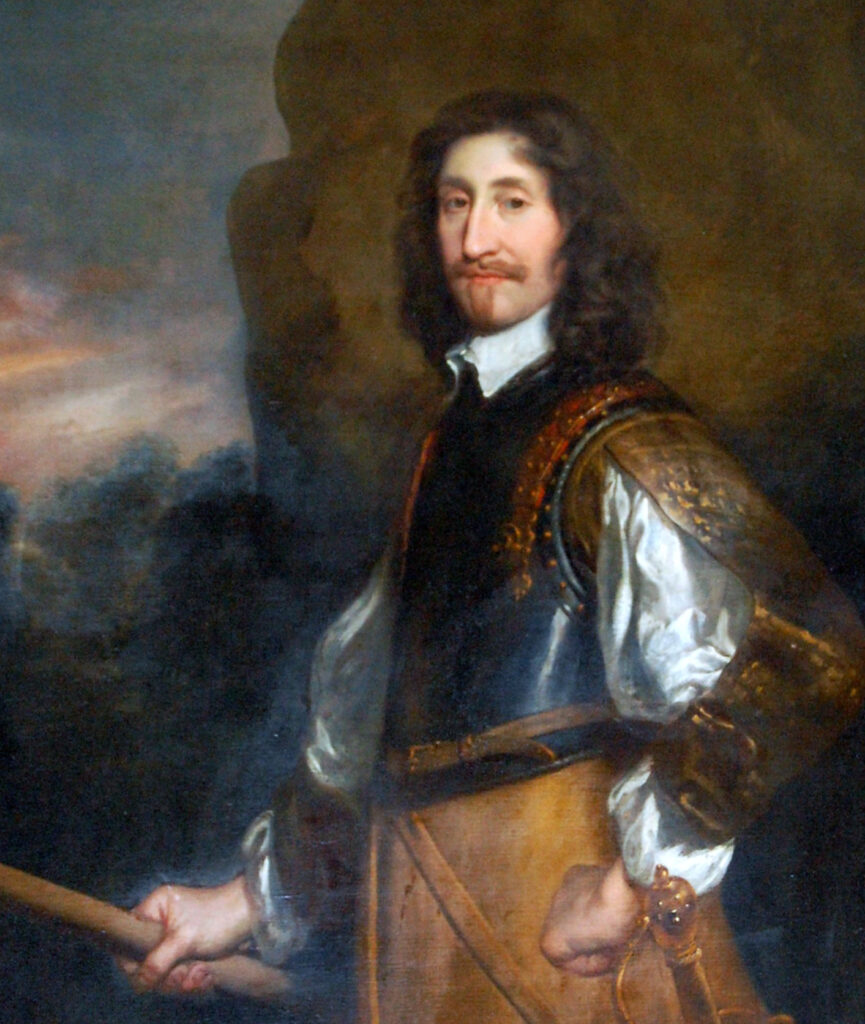
Edward Montagu, painted in the 1640s when he had become 2nd Earl of Manchester by Anthony van Dyke
The foot soldiers of the Earl’s own regiment were, mostly, conscripts: men put forward as useful or expendable by officials for their towns or parishes, the kind of men who were herded onto the road by constables and recruiting sergeants across East Anglia to fill quotas declared necessary by Parliament in Westminster — among the 140 conscripts sent from the city of Norwich in 1643 were servants, apprentices, barmen, a butcher, and a husbandman.
They were decidedly local forces — although they were taken from their communities to serve far from home, Manchester preferred that new recruits joined a regiment that had originally been created in their area, as this “made the soldiers more united among themselves”.1
They were poorly provisioned, often unpaid, and deserted at the drop of a hat — Manchester was chronically short of funds and complained that new recruits were “by far more dreadful to me than any enemy whatsoever”.2 Unpaid for five months, his garrison at Northampton ran up debts of £3,000 (over £350,000 in today’s money)3 and up to half of new recruits disappeared before they had even reached his army.4
Yet these were the men who stormed the walls of Lincoln and York, fought at Marston Moor and Newbury, and later formed the backbone of Parliament’s victorious New Model Army.
In 1642 Edward Montagu was in his early 40s, acting as Speaker of the House of Lords, and one of the central figures in the opposition to King Charles I. Known as Lord Mandeville — a courtesy title given to him as the elder son of his father, the Earl of Manchester — he was a canny and well-liked politician, but had no military experience. Yet he would become one of Parliament’s most successful generals and the men of his infantry regiment would play a central role in many of the wars’ most important moments. That regiment, however, was not his first.
When war was declared between King and Parliament in August 1642, Montagu was one of fourteen peers selected as colonels by Robert Devereux, Third Earl of Essex and Lord General for Parliament’s new army.5 Mandeville had no experience of war, yet he was now the commander of a regiment consisting of 705 rank and file soldiers, mostly drawn from the county of Essex. Under him were his lieutenant colonel, John Parkinson, and major, John Drake, with seven companies under captains Francis Wilson, Henry Samerster, Edward Watts, Robert Goodwin, Daniel Redman, Osborn Williams, and Robert Palmer, each with their own lieutenant and ensign. Its Provost Marshall, charged with maintaining discipline, was John Turner; and it had a surgeon, William Stannard; Carriage Master, Robert Ousby; and Quartermaster, Nicholas Wood. Like most regiments, Mandeville’s also had its own chaplain, Simone Ashe, who would become a life-long friend and ally of the future earl.6
The regiment joined the Earl of Essex’s army at Northampton on 10 September and marched to Worcester where, realising the King had outmanoeuvred him, the Lord General gave chase. The two armies eventually met at Edgehill in Warwickshire on 23 October, the first pitched battle of the civil war. Stood before the steep escarpment down which the Royalists would advance, the centre of the Parliamentarian army was drawn up in two lines; the front line was composed of the infantry of Sir John Meldrum and Colonel Charles Essex, with Mandeville’s men — clad in blue coats — standing within Essex’s brigade on the left.7 This is the first time any of them will have seen battle and it is likely that they were significantly understrength, having left several companies behind to garrison Northampton.8
These men then watched as Royalist horsemen under the king’s nephew, Prince Rupert of the Rhine, smashed the Parliamentarian cavalry at full gallop and chased them away. The Royalist infantry then began marching down the hill towards their opponents. Green and ill-trained, Mandeville’s men simply turned and fled. At first begging them to stay and fight, he then fruitlessly beat some of them with a cudgel to try and force them back.9
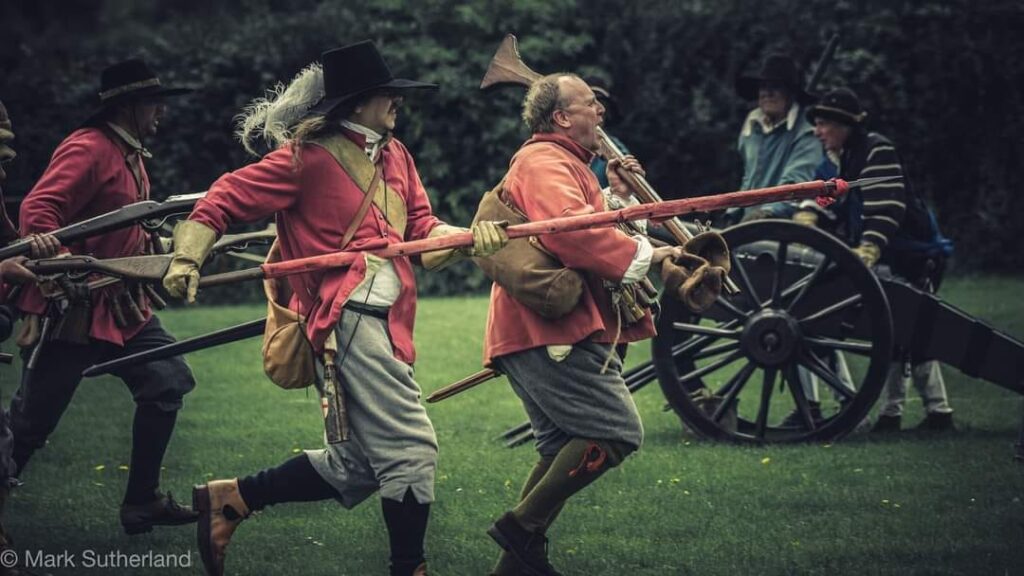
Photo: Mark Sutherland
In this rout, Mathew Milborne from London was “beaten down and stripped”. An ensign entrusted with a company’s flag or ‘colour’, Milborne had received his commission in Mandeville’s regiment under Captain Palmer in July 1642 but his injuries left his health “much impaired”. He was given a month’s leave but “being come home, fell sick and died” on New Year’s Eve, leaving “a great family” and his widow Katherin, who later desperately petitioned Mandeville for financial aid.10
This was Mandeville’s first taste of leading a regiment into battle and it had gone disastrously.
Edgehill proved to be a harrowing stalemate for both sides but having regrouped and rejoined Essex’s army, Montagu and his men were among 24,000 troops that stood at Turnham Green, six miles from London, on 13 November when the King’s army finally approached the capital. By now he was no longer ‘Mandeville’ but rather ‘Manchester’, having risen to become the second Earl of Manchester following the death of his father a few days before. There would be no rout this time as, after some desultory skirmishing, the King — outnumbered and with dwindling supplies — withdrew his forces from Turnham Green to Reading and then to Oxford, which he made his new capital.
With defeat averted, the new Earl returned to business in London and, with its commander back at the political and organisational heart of the Parliamentarian war effort, his regiment was disbanded. But by the middle of 1643, the situation was becoming dire for Parliament. Cornwall, Yorkshire, and Bristol had fallen to the Royalists, and the Earl of Newcastle’s army was pressing south into Lincolnshire. Seizing the moment, on 13 August closet Royalist Sir Hamon L’Estrange declared his support for the King and took control of Kings Lynn in Norfolk, a key port deep in Parliamentarian territory.
“Raise all your Bands, Send them to Huntingdon, get up what volunteers you can, hasten your horse,” cavalry commander Oliver Cromwell wrote desperately as he prepared to meet the advance. “You must act lively, do it with distraction, neglect no means.” Parliament found a ready excuse to fire and gaol Lord Grey of Warke, who had been the ineffectual leader of the forces of the ‘Eastern Association’ of Norfolk, Suffolk and Essex since the outbreak of war.
Manchester was to be his replacement.
The counties of the Eastern Association were ordered to raise 20,000 men for Manchester’s new army “for the defence of King, Parliament and Kingdom”.11 The nucleus was to be provided by three old volunteer regiments that had served under Lord Grey, but these were “pitifully weak”; Thomas Higharne of Coggeshall in Essex was not alone in having served under Grey “before Reading and afterwards” but “lost his limbs and is no way able to subsist of himself”.12 Nor could Manchester call on those who served with him in 1642 — a Captain Daniel Redman seems to have been the only officer who served in both of the Earl’s regiments.13 Afflicted by sickness, bad weather and lack of pay, Grey’s forces become mutinous and, upon returning to their home counties to be recruited back up to full strength, many remaining soldiers simply used it as an opportunity to desert.14
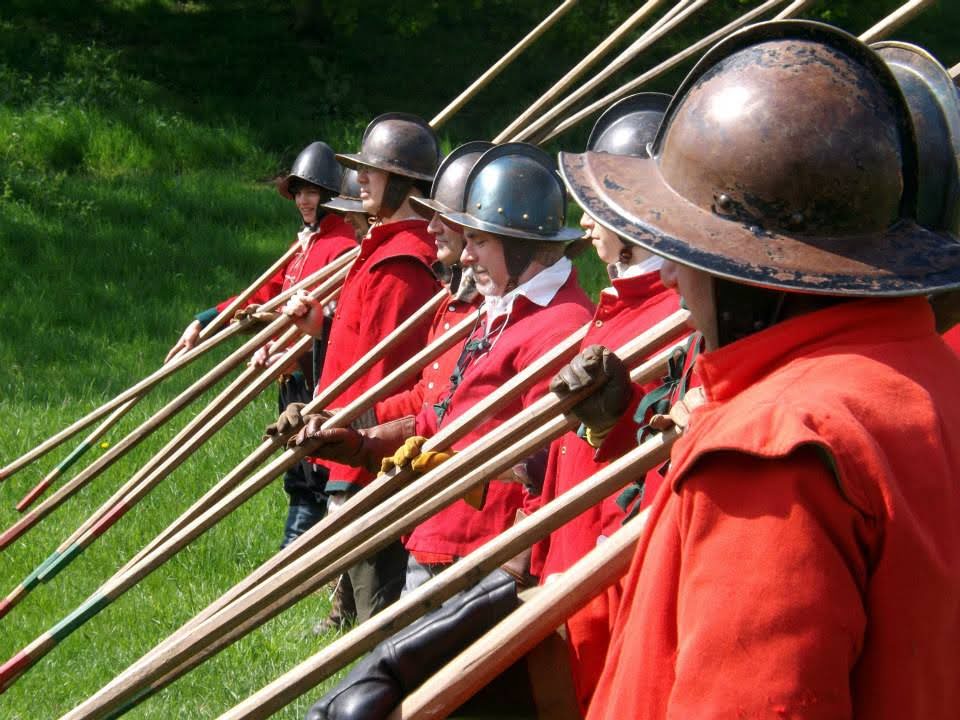
Photo: Rob Jones
Essex bore much of the brunt of the desperate recruitment drive: required to raise two regiments of 1,200 infantry and 360 dragoons each, it would end up supplying a full quarter of the 8,545 men in the army by September 1643. Raised in the county in August, the Earl of Manchester’s own regiment was large by Civil War standards and may have consisted of as many as twenty companies; the Colonel’s company was to have 200 men, its Lieutenant Colonel’s Company 160 men and the Major’s Company 140 men. Each regiment would also have two ‘Captain adjutants’ “to assist the Captains in the exercise of their soldiers” — these would have been experienced soldiers, probably veterans of the wars raging in Europe, who could teach both fresh captains and raw recruits how to actually fight.15 However, Manchester initially decried the quality of the officers he was being sent, complaining that the men he had requested had not arrived but instead he had been sent “strangers” who “abuse the country and make mutinies amongst their men”.16
Even basic clothing was scarce. On 16 September 1644 a Thomas Buckley delivered 1,167 pairs of breeches, material for 500 doublets, and 698 “green coats lined red”.17 A month later, William Harlackenden — who was Manchester’s Commissary General, the senior official responsible for mustering troops — called for more than 2,100 more coats to be sent, made of green cloth lined red. Soldier’s coats were made of one colour of woollen cloth, with collars and turnbacks at the wrist in a contrasting colour, allowing them to be identified as belonging to a specific unit. The supplier, William Gray, wrote back to say that he hoped to have up to 1,000 coats ready, but “I find this material so hard to get that the bargain will be very hard to meet” and he expected “that sort of cloth is not to be had for money at the present”. The difficulty of finding green wool cloth may have resulted in this ‘double-sized’ regiment being divided in two — one division received green coats lined red and the other red coats lined green — Major Holmes’ Company wore green coats, with the red coats commanded by Lieutenant Colonel Clifton.18
On 9 September, Manchester wrote that he had completed his own company with men brought to him by a “Captain Sherife and Captain Risbrooke” and was looking to do the same for his Lieutenant Colonel, Major and other captains. While there had been some transfers from other armies and a handful of volunteers, most of the infantry were conscripts.19 These men deserted readily — Manchester had to write to the Committee of Essex to tell them “I have here diverse men sent out of the county of Essex and as many of them I believe are run away as are come” — half of a batch of new recruits from Essex disappeared before they even reached the Siege of Kings Lynn in September 1643.20 Even those that arrived were in a desperate state, with the Committee at Cambridge complaining some were “in so naked a posture that to employ them were to murder them” and The Earl requesting “drummers, colours, halberds, partizans, drums and clothes” for both of his Essex regiments. “I earnestly entreat you,” he wrote on 7 September, “to send arms and other provisions with those you send or else I pray send no more.”
These issues of manpower and resources would dog his forces for the entirety of the war, but the urgency of the situation meant he had to work with what he was sent — King’s Lynn needed to be dealt with and quickly.
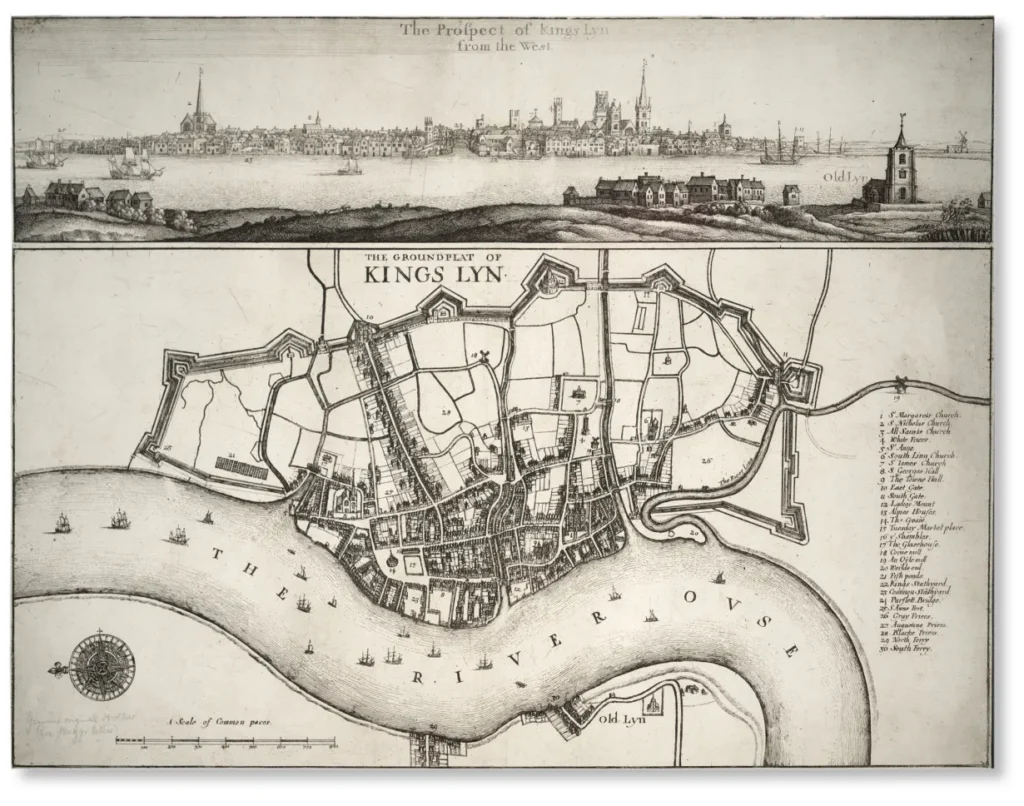
A period map of King’s Lynn’s defences
Situated near the mouth of the Great River Ouse as it enters the Wash, King’s Lynn was an important port and logistical hub in the 1640s. Besides shipping raw materials such as Peak District lead and local linseed to London, its proximity to the Dutch coast meant weapons and munitions could be imported from abroad.21 With the Earl of Newcastle’s army marching through Lincolnshire, L’Estrange’s ‘bloodless coup’ threatened to open a back door deep into Parliamentarian territory.
The siege of King’s Lynn began on 23 August. Although he only had 3,000 cavalry and 1,500 infantry — the latter from the regiments of Colonel Valentine Walton and Colonel Francis Russell — Manchester was being sent more men each day. The town has well defended and defiant so gun batteries were erected. One of those bombarding its walls was Nathaniell Bennett, whose served as a gunner with his brother and would, five years later, be killed at the Siege of Colchester.22 As scaling ladders and boats were gathered to storm the town the besiegers lost four men, including a cannoneer who was killed by a shot from a small anti-personnel cannon called a drake and a lieutenant who died after his arm was shot off. Fighting alongaide them was Thomas Butcher from Langham, a village about four miles from Colchester in Essex, who was “pressed for the service of the Parliament” and returned “sore and dangerously wounded” from the siege.23

Photo: Steve Liddle
Manchester’s army had swollen to 8,000 men by the time the town, having refused to surrender three times but seeing no prospect of salvation by the Earl of Newcastle, capitulated on 16 September. With Lynn pacified and his men bloodied, Manchester marched them into Lincolnshire to confront Newcastle’s forces, besieging Bolingbroke Castle before the cavalry of Sir Thomas Fairfax (brought in boats over from Hull, where they were cooped up by Newcastle’s siege) joined the Eastern Association’s horse under Oliver Cromwell and smashed the Royalists at Winceby, the Earl “drawing up all the foot to have relieved the horse, in case they had needed it”.24 Lincoln surrendered on 20 October and, with Newcastle turning his attention to the siege of Hull, Manchester moved his army into winter quarters.
By now, he was securing the services of experienced men from other Parliamentary armies, “often with the lure of promotion”.25 Two such men, Robert Johnson and Henry Archibald, transferred from Colonel John Fienne’s regiment to Manchester’s regiment in late August, the latter quickly promoted to Major.26 Money, however, continued to be a problem — between September and December Major Holmes’ company of Manchester’s regiment, which was meant to be paid by the county authorities of Essex, was five weeks in arrears.27
After the winter, a Parliamentary newspaper stated that the army of the Eastern Association consisted of 10,000 foot, 3,000 horse, and 2,000 dragoons.28 On 19 April 1644, the Committee of Both Kingdoms — the Parliamentary committee directly the war effort — ordered Manchester to march north to help the armies besieging York. On the way, he was forced to attack Lincoln as the Royalists had retaken it. Occupying the lower part of the city amid appallingly wet weather, at three o’clock in the morning on 6 May his regiment was part of the assault on the formidable castle and cathedral close.
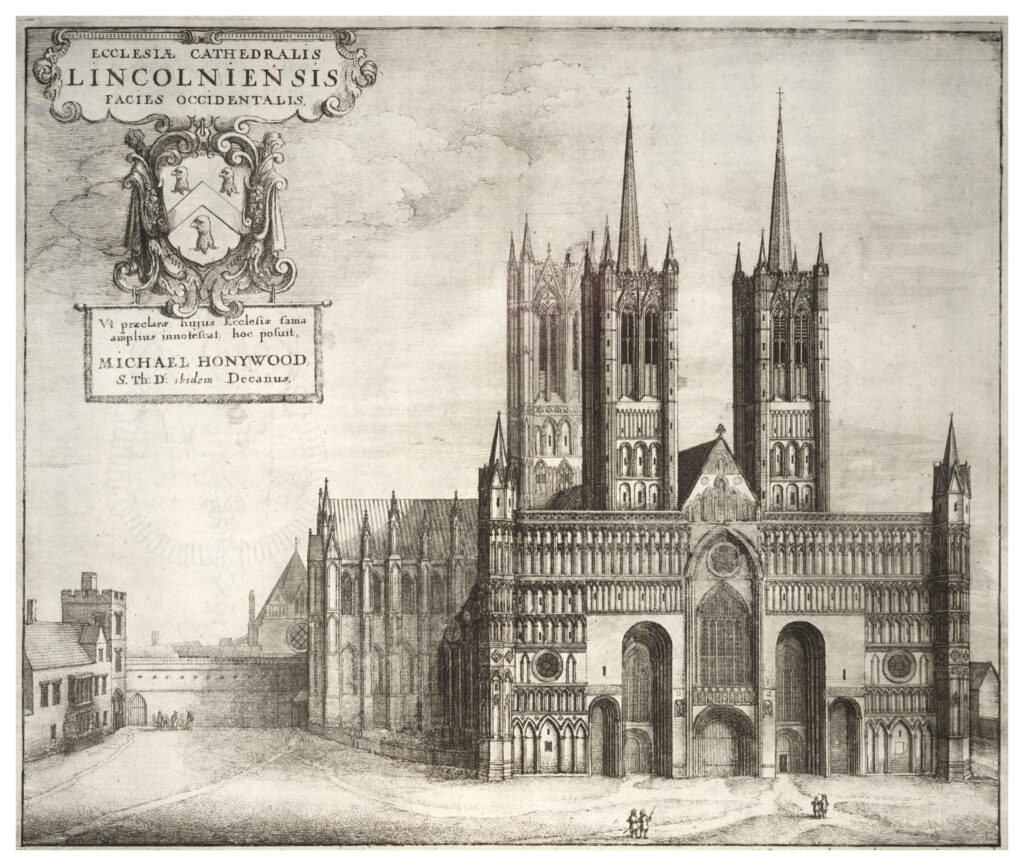
A period illustration of Lincoln Cathedral
Six cannons were fired as a signal and “within less than a quarter of an hour we got up to their works, which the Foot with much gallantness performed,” wrote one account, “receiving all their shot which they poured out like hail, the Enemy being all ready to receive our charge, and expecting us when we came”. The men rushed forward and began scaling the walls but were hampered by the length of their ladders, which were too short to reach the top: “Our Foot never left running till they came to the top of the Hill, which would have been enough to tire a Horse, being under their works we set up the scaling ladders, which they seeing left their firing and threw mighty stones upon us over their works by which we received more hurt than by all their shot; but all would not daunt our men, but up to the top of the ladders they got, which proved too short, most of them, to reach the top of their walls and works, they being most of them as high as London Wall; but yet they shifted to get up.” Seeing this, enemy morale folded and the Royalists “betook themselves to their heels” whereupon “our men over their works shouting, and following as fast after them; but they not knowing whether to run, cried out for quarter, saying they were poor Array men; we slew about fifty of them, about twenty of them were slain in the Castle yard, where they made the most resistance.”29
Whereas the Royalists suffered around 150 fatalities and between 650 and 800 of them were captured, a Captain Ogleby and a Lieutenant Saunders were two of just eight of Manchester’s regiment to die.30 The forty wounded included Henry King of Helions Bumpstead, near Braintree in Essex, a musketeer in Captain William Walden’s company of Manchester’s regiment who “by the blowing up of a barrel of gunpowder at the receipt of ammunition… [his] eyes were exceedingly blasted, whereby he is rendered incapable to follow his labour towards the maintenance of his wife and three small children, which are in necessity.” 31 One newsbook praised Manchester’s colonels “and other superior officers” who were “in the face of all the dangers, performing equal service with the meanest soldier (who undoubtedly received much life and courage from the undaunted resolution and forwardness of their commanders)”.32 As a reward for victory, Manchester’s men were allowed to pillage the upper part of the town while many of the prisoners switched allegiance.
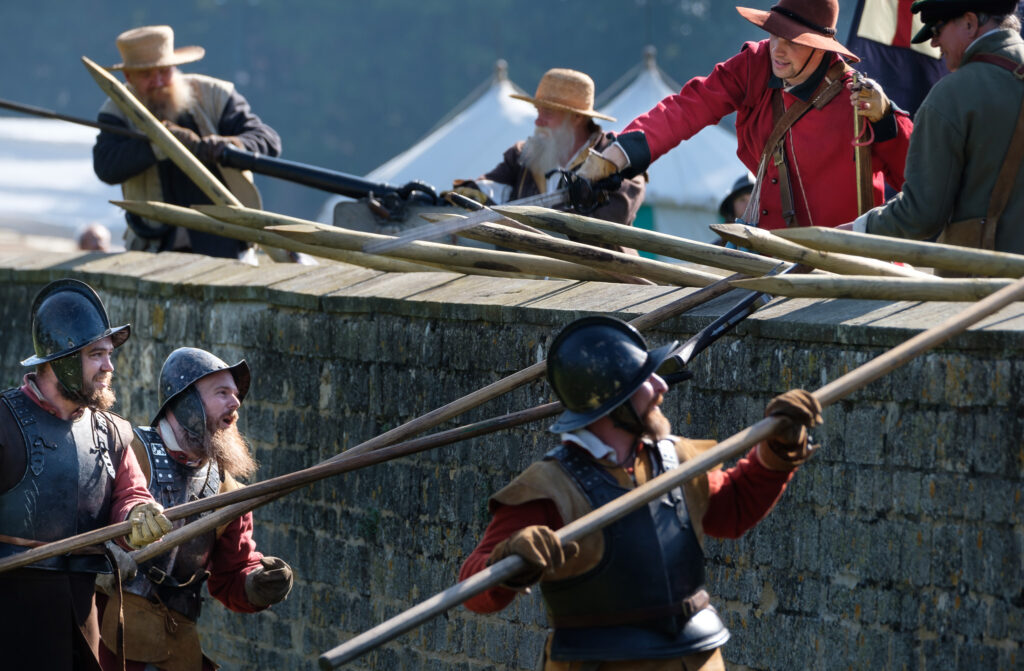
Photo: John Beardsworth
After waiting briefly at Lincoln, Manchester marched his men north to York to join Parliament’s Northern army under Sir Thomas Fairfax and the Covenanter army of Alexander Leslie, 1st Earl of Leven — a Scottish force that Manchester and his ally, the MP John Pym, had worked hard to bring into the conflict. Having to march through appalling weather and “divers diversions by waters and deep ways”, his men were cheered by the commands of their “much honoured commander” which “carried the poor soldiers forward … which much cheerfulness … because the Earl himself, for their encouragement marched along with them the greatest part of the way”.33
From this point, it becomes difficult to distinguish the individual actions of the regiment, as sources use “Manchester’s men” interchangably when referring to the Eastern Association army as a whole. When he arrived at York at the start of June, Manchester had six regiments of foot including his own — which had eighteen companies — along with those of Major-General Crawford and Colonels Montagu, Russell, Pickering, and Sir Michael Hobart. But in June, five of his regiments mustered just 3,145 men — meaning the army was drastically understrength.34
Crossing a bridge of boats across the Ouse his army had constructed, he then met with Fairfax and Leven to coordinate the encirclement. Although tired after their rapid march, some of his soldiers stole steal oxen, cattle, and horses from pastures at the very foot of the city’s walls.35
Manchester’s army spread itself out around the north of York, establishing a “leaguer”, or military camp, that stretched from the River Ouse to the River Foss. “Sleight encounters” took place as his men took control of the city’s suburbs. The Royalists set fire to surrounding houses to deny them cover but “the Earl of Manchester’s men nevertheless entered and beat in the enemy … and saved much of the houses from the fire”.36 On one raid, “about 27 of the Earl of Manchester’s Regiment being voluntarily led by a colonel of horse into the east suburbs, killed 5, took some goods and retreated without loss” while on another the men managed to hold the ground they’d gained but lost of “5 or 6 at the most, and so many wounded”, even as grenades were tossed at them from the battlements,37

An idealised map of the 1644 siege of York
However, after the light casualties before King’s Lynn and Lincoln, York was a more punishing experience by far. Although tents and supplies were brought up from Cambridge and King’s Lynn, life would have been highly unpleasant for Manchester’s men, who were forced to seek what shelter they could for days on end. The weather was appallingly bad for the time of year, with two weeks of near constant rain, and and death could come at any time as every movement took place under almost constant fire from the cannons and muskets lining the city’s walls and towers. There were many miraculous escapes: a cannon bullet took off the top of a soldier’s hat but left him unharmed, one had the heel of his shoe shot off, and another had his sleeve torn while a lieutenant was knocked down by the wind of a cannonball.38
Others were not so lucky. “The Cannon played on both sides, very often,” wrote Manchester’s chaplains Simeon Ashe and William Goode, “we know not with what damage unto the enemy, but only one of our souldiers was slaine, who as he was asleepe, by a bullets grazing was struck through his body, yea through his heart.” 39 Richard Ellsing was one of those from Manchester’s regiment whose life was utterly changed by this grinding siege. A weaver by trade and inhabitant of the tiny parish of Helions Bumpstead in Essex, he would have known the Henry King who was blinded at Lincoln and had been conscripted in 1643 to serve under Captain William Walden, who commanded a relatively small company of 70 men in Manchester’s. It was before the walls of York that Ellsing was maimed by a Royalist cannon, which shot off one of his legs.40 Even less fortunate was Danyell Emming, who seems to have been a rare volunteer who “[took] up arms for the service of the Parliament” with his two sons and served under Captain Vincent Boyce in Manchester’s. Hailing from Coggeshall in Essex, which lays just twenty miles from Helions Bumpstead, Emming died in the York suburb of Heslington, close to Lamel Hill where Fairfax’s men had set up a gun battery.41 On 19 October 1644, Dr Edward Webb presented his bill for “curing of wounded and maimed soldiers”, including one William Parker who was “shot at York and the bones of his hand shattered all to pieces”, and whose treatment cost more than £6.42

Photo: Michael Molcher
It wasn’t just the cannons that were a threat. On Monday 24 June, a 600-strong Royalist “commanded party” sallied out of the walls at Monk Bar, near York Minster, and “furiously assaulted” Manchester’s lines. After a “sharp conflict” the attackers were driven back into the city after suffering 20 dead and 20 captured, yet inflicting only two or three casualties.43
The most deadly incident of the siege likely did not feature men from Manchester’s own regiment, but rather those of his teenage cousin — also called Edward Montagu. The sturdy medieval St Mary’s Tower projected out into Manchester’s lines and as soon as his forces arrived at York they began digging tunnels underneath it, which would be packed with gunpowder to bring the defences tumbling down. But on 16 June, one of these mines was “sprung” — allegedly prematurely — and “many townsmen and women were killed in the explosion”. Manchester’s second-in-commend, the Scottish Presbyterian veteran Major General Laurence Crawford, sent in 600 men from his and Colonel John Pickering’s regiments along with Montagu’s Suffolk redcoats but, despite initially making it into the city, they were surrounded and cut off from retreat. “They fought resolutely as long as their powder lasted, and then submitted,” wrote a Royalist account.44 “Fifteen of them being killed, and sixty wounded, who, with about a hundred more, were made prisoners. There were also killed before they entered the breach about 20, and 40 wounded; so that in all that day the besiegers were computed to lose near 300 men”.
Ashe and Goode described the harrowing aftermath of the failed assault: “some of our soldiers betwixt nine and ten o’clock, approaching towards the place where the tower stood heard in the rubbish a very doleful cry, some calling help, help; others water, water. This lamentable complaints moved our men to resolve their belief; so they dug one out dead in the rubbish, and brought two alive. But from the town such fierce opposition was made by the merciless enemy against our soldiers while they were labouring to save their friends lives, that they were compelled to leave many poor distressed ones dying in the dust.” A truce was agreed for an hour while the Parliamentarians buried their dead.45
While his opponents claimed the cost put him off from assaulting the walls again, the verbose Royalist poet Payne Fisher praised Manchester as “that wisest of noblemen” who “kept his troops safe behind defence works”, as someone who displayed “not only courage but stratagems and subtle tricks of various kinds”, and on one occasion “so as to cause the maximum of loss to the enemy and the least to his own forces, he pretended that his men were running away so as to draw on the foe with false hopes”.46
On top of this major loss of life, Manchester’s army was also haemorraging “a good many men from desertion or sickness, and the muster-rolls show a rapid diminution amongst his infantry”.47 Two captains from Manchester’s army alone sent twenty-eight men to the hospital camp for the sick and wounded on the Isle of Axholme in Lincolnshire, and an epidemic of a “fevour and flux” – probably typhus – would rip through the ranks for two months. But at least they were well-supplied — Fairfax complained that the men of his northern army “are like to mutiny and many run away, whom I cannot in justice punish having nothing to pay them withall”, whereas Manchester’s were “very well paid” and even had enough supplies to give some to Leven’s Scottish troops. However, the true test of their mettle was to come.48
Prince Rupert of the Rhine was the personification of the idea of the ‘Cavalier’ — young, dashing, handsome, a man of action. Believing his uncle’s orders encouraged him to seek battle, he marched his Royalist army through Lancashire, across the Pennines, and wrong-footed all three Parliamentarian commanders into lifting their siege. Assuming he would head south, they began marching towards Tadcaster and quartered around Long Marston, seven and a half miles from York on the evening of 1 July. Dislodged from their siege lines, “very few had either the comfort of convenient lodging, or food: our Soldiers did drink the wells dry, and then were necessitated to make use of puddle water”.49
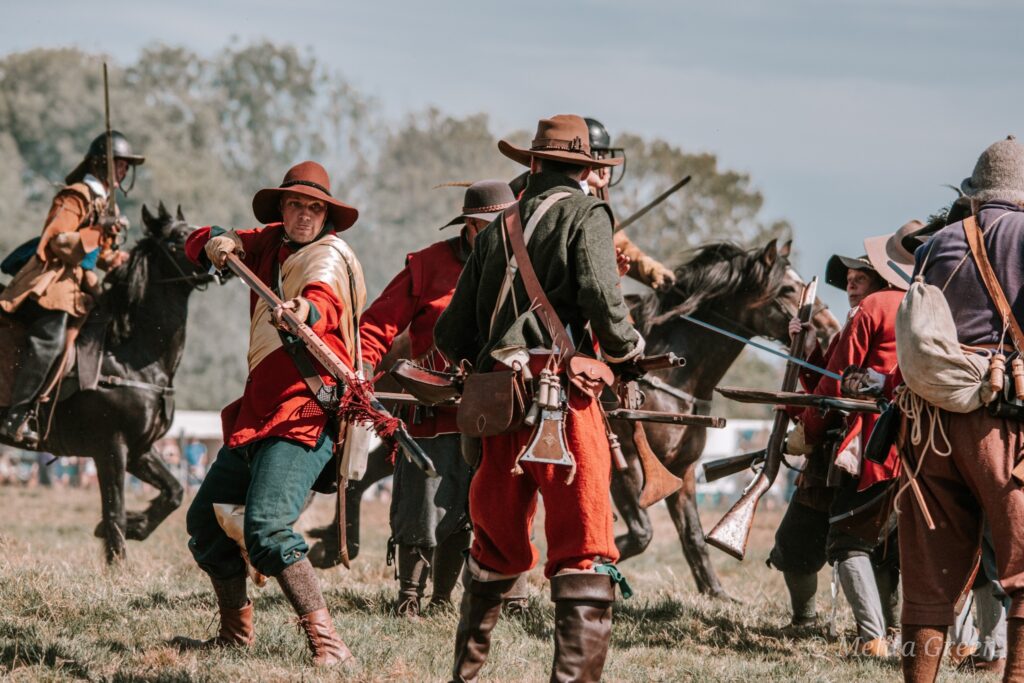
Photo: Mel Green
The next day, Rupert lined his troops up for battle along the open rising ground of Marston Moor. Manchester, Fairfax, and Leven’s troops were strung out along the road south, so had to be recalled. Luckily, the Earl of Newcastle’s troops were late arriving, giving the allies just enough time to form up in good order. Placed in overall charge of the combined Scottish and Parliamentarian army, Leven organised three main lines of infantry. Manchester brought three brigades, numbering probably about 5,000 men; two brigades were placed on the left of the front line while Manchester himself took command of an entire brigade on the right of the third row.50 Despite being understrength, his regiment was composed of 18 companies and formed an entire brigade, which was positioned to support a brigade of Scottish troops, formed of The Loudon-Glasgow Regiment, also known as The Chancellor’s Foot, the Earl of Buccleugh’s Tweeddale Regiment and Lord Gordon’s Regiment.
To identify friend from foe, the Parliamentarian army wore a white handkerchief or a piece of white paper in their hats, and their field word — a code phrase soldiers could use in the chaos of battle — was “God with us”.51 Advancing under an unseasonal hail storm, the front two Eastern Association brigades of Colonels Russell, Montagu, and Pickering’s charged Royalist troops lining a hedge or ditch and “after short firings on both sides…caused the enemy to quit the hedge in a disorderly manner”. They then advanced to meet Prince Rupert’s and Lord Byron’s Royalist regiments in a brutal fight where they “behaved themselves most gallantly” even though they were “impressed with unequal numbers, and distanced from seasonable succour, became a prey to their enemy”. Though cut off, according to the Parliamentarian newspaper A True Relation of the Late Fight, they “stood as a wall of brass and let fly small shot like hail upon the enemy, and not a man of their whole brigade [was] slain … I pity the enemy’s common men who cried ‘pity us, pity us, we are array [conscripted] men’.”52
In the face of being “furiously assaulted” by the Earl of Newcastle’s infantry, the allied line began to break. Thomas Fairfax’s brigade retreated in “some disorder” and three brigades — including the Scottish brigade next to Manchester — broke and ran after being attacked in their flanks by Royalist cavalry, many of them without even having fired a shot.
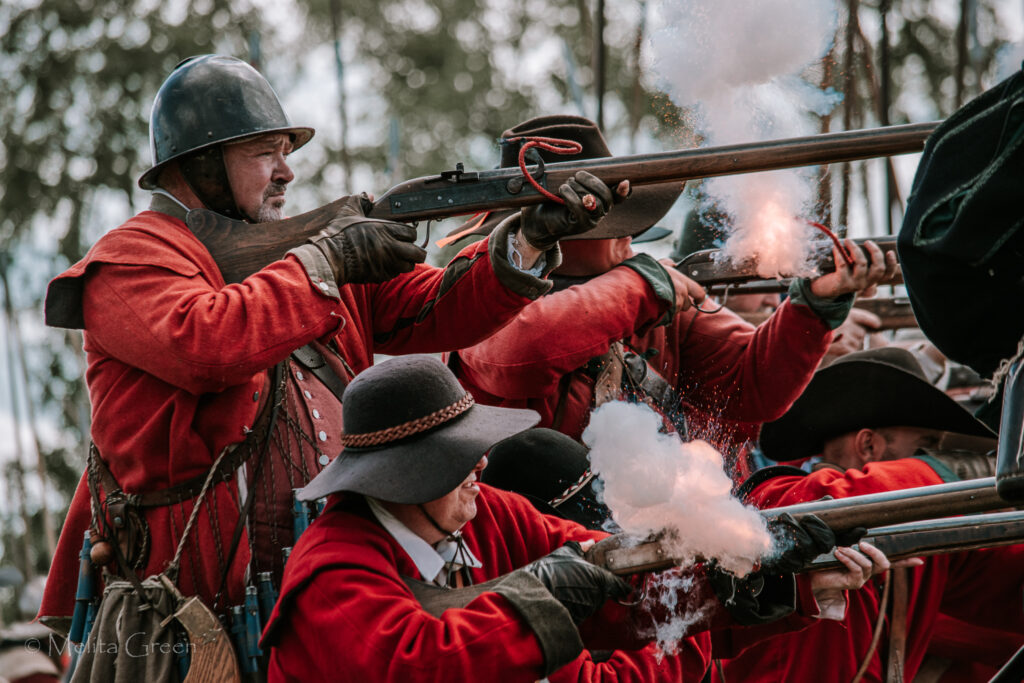
Photo: Mel Green
Fortunately for the Parliamentarian war effort, most of the Eastern Association held firm. It is often claimed, both at the time and since, that Manchester and the other allied commanders — Fairfax and Leven — fled the field at some point during the chaos. But it is likely that Manchester was either briefly swept up in the rout or had chased after retreating soldiers; indeed, Simeon Ashe wrote that he saw both Leven and Manchester rallying soldiers: “The Earl of Manchester with much labour did rally five hundred of the soldiers who were leaving the field in great disorder, and brought them back again to the battle”. The stubborness of the Eastern Association gave eighteen regiments of Scottish infantry time to plug the gap in the Parliamentarian lines. Leonard Watson, Scoutmaster-General of Manchester’s army, was present as a cavalryman and wrote that Manchester’s infantry “went on by our side, dispersing the enemie’s foot almost as fast as they charged them, still going by our side cutting them down, so that we carried the whole field before us”.53 A captain known only as “W.H.”, who is believed to have served in Manchester’s army, wrote that the battle “was hotly disputed between the two main bodies … but theirs at last perceiving their friends thus flying, began likewise for their own safety to betaken themselves to their heels”. With the Parliamentarian cavalry under Oliver Cromwell and Fairfax coordinating their attacks the tide began to turn and, despite a stubborn but desperate ‘last stand’ by the Earl of Newcastle’s white-coated regiment, the Royalists broke and fled in chaos back to the relative safety of York.
At around 11pm, Manchester walked through the ranks thanking the soldiers for “the exceeding good service which they had done,” wrote Ashe, and “that although he could not possibly that night make provisions for them, according to their deserts and necessities, yet he would without fail endeavour their satisfactions in that kind in the morning. This was appreciated by the soldiers who ‘told his Lordship with much cheerfulness that though they had long fasted, and were faint, yet they would willingly wait three days longer, rather then give off the Service, or leave his Lordship”.
After weeks being shot at from the walls of York and such a hard battle, many of Manchester’s men vented their frustrations by plundering their defeated opponents: “many of our soldiers (the horse-men especially) met with much gold and silver, and other commodities of good worth,” wrote Ashe. “And indeed they deserved such encouragements, by their excellent service and brave adventures”. However, Manchester was forced to admonish his cavalry for looting Royalists as they left York after surrendering on 16 July, in contravention of the surrender terms, and threatened any of who didn’t turn in their loot with “the uttermost severities, being death by the Articles of Warre”.54
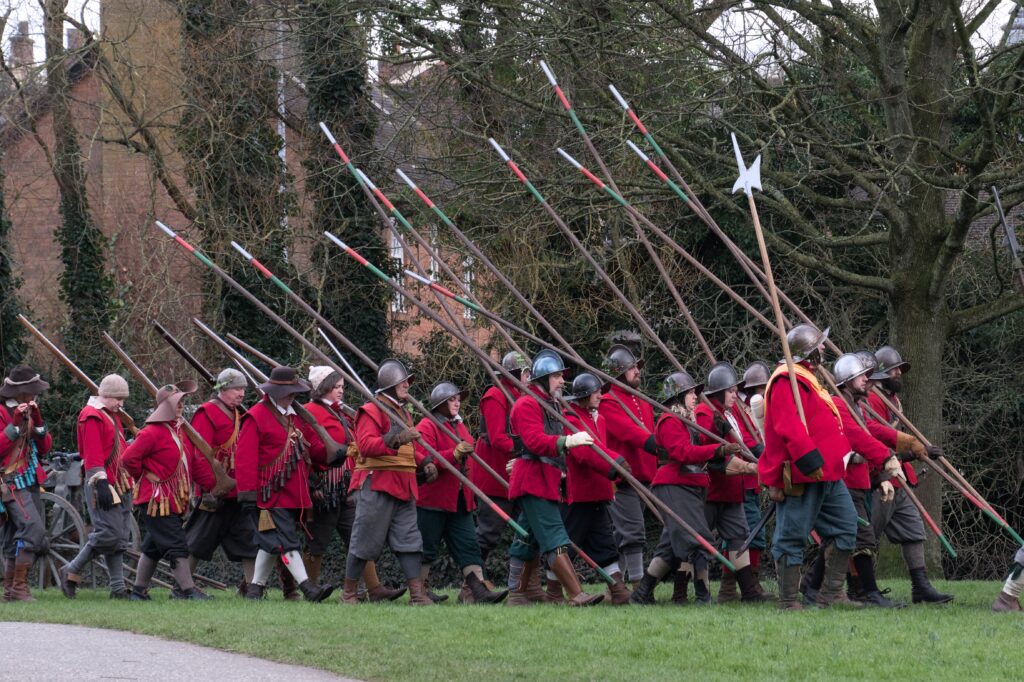
Photo: Kevin Pierce
Marston Moor was the second largest battle ever fought on English soil, with up to 46,000 soldiers from five armies, and the defeat was so punishing that it meant King Charles lost control of most of the north. While the Royalists lost 4,000 men, the allies had less than 300 killed. Manchester’s regiment was soon reinforced, with each company receiving between four to six men; Captain Samuel Gooday is known to have lost just three men while Captain Hall received fifteen. Yet the regiment remained understrength, losing 500 men between May and July 1644, and reduced to 1,120 in total.
Now thoroughly sick of one another, the allied commanders gladly parted ways and on 20 July Manchester quartered his army ten miles away at Tadcaster. Marching thirteen miles to Ferrybridge, he chose not to besiege Pontefract Castle, and continued another seventeen miles to Doncaster, where the army arrived on 23 July and remained until 1 August. However, this was no longer the well-supplied and paid force that had attacked York. Manchester continually insisted that the Association’s county committees supply money for arrears of pay and counted himself fortunate “that both the officers and soldiers have never yet refused any marching or duty for want of pay”.55
Reaching Lincoln on 6 August, where he hoped to rest his troops “after the great hardships they have endured”, he complained that the lack of new recruits being sent to him “puts me into an unserviceable condition”. Although the army had picked up 4,500 muskets, 800 pikes and 40 barrels of gunpowder from Marston Moor, it was short of everything else and everywhere it marched there were accusations of clothing, provisions, and horses being seized. Plundering was technically punishable by death but the only Association soldier known to have been punished was a corporal of horse who was “unwise enough to rob the servant of a regimental officer — and he was merely imprisoned and cashiered”.56 In addition, sickness continued to whittle away at his numbers, Manchester had already warned that his men “through want of clothes and other necessaries fall daily sick. I hope the Lord will preserve us from any pestilential disease, yet the Scotch Army and mine is very much weakened through sickness”.
Photo: Michael Molcher
Those injured were not abandoned by their commander. In October, Manchester ordered that twenty shillings should be paid to John Hind, a maimed soldier who had served under Captain Edward Meredith.57 The experience of George Hancocke would have been typical for the men who served in Manchester’s regiment – he was a clerk under Captain Dennis Taylor of Edward Montagu’s regiment and, since Christmas 1643, had been “upon all the designs that have been on foot since his going forth”. This began with the storming of the castle at Lincoln in May, “the scaling the walls of the manor yard” at the siege of York in June, and the Battle of Marston Moor in July, before helping in the mop up of Royalist garrisons by Crawford’s brigade at Sheffield Castle, Tickhill Castle, Welbeck House, Bolsover Castle, Staveley House and Wingfield Manor. He fell ill in August, probably one of the victims of “fevour and flux” that so debilitated Manchester’s during and after the siege of York. Hancocke was “carried upon a cart after the army” until September when he was so weak that he and another sick soldier, Robert Fawcett, were taken from Baldock to Cambridge. There he said he was “both sick and lame” and owed eighteen weeks’ pay of ten shillings and six pence.58
On 10 August, Manchester insisted to the Committee of Both Kingdoms that his army “was not strong enough” to do what was being asked of it, “our present want of ammunition and equipage of all sorts” meant his regiments “are in great need of recruits, so many being sick and wounded, so that if we should now march we must leave a third part of our forces behind, added to which our arrears of pay are intolerable”. Reaching St Albans in mid September, Manchester’s regiment numbered 1,111 men.59 Major Gabriel Holmes and Captain George Montgomery of the regiment wrote to the Earl that few supplies were found in surrounding villages as “we find a general indisposition in the inhabitants to accommodate the soldiers with victuals” and most locals were “unwilling or unable to trust although we have engaged ourselves for paying [for] all quarters”.60
The army remained at St Albans for over a week as Manchester was reluctant to march west as ordered by the Committee for Both Kingdoms, following the destruction of the Earl of Essex’s army in Cornwall in June, while the Eastern Association county committees were complaining of their “defensive” troops being so far from its borders. By the end of September the army was at Reading, where he found some shoes for his men,61 and at the beginning of October he arrived with Montagu’s and Hobart’s regiments outside Donnington Castle, near Newbury. The castle was held by Governor Lieutenant John Boys, who refused to yield. By sheer coincidence a captain in Manchester’s own regiment was Boys’ brother, Vincent, who the Earl asked to write to his Royalist brother to try and persuade him to surrender on “honourable conditions”. John is said to have replied that nothing could “deter him from his fidelity and loyalty to his sovereign”.62 Over a nineteen day siege, the besiegers fired more than 1,000 shots at the castle before giving up and marching away.63
Following his defeat of Essex’s army at Lostwithiel in Cornwall in early September, the King slowly marched east to relieve the garrisons at Basing House, Banbury, and Donnington Castle before — rather ambitiously — intending to spend the winter inside the area controlled by the Eastern Association. With just 3,700 infantrymen, a full third of them from Manchester’s own regiment, the Eastern Association was in no shape to face the King’s forces alone. After loitering at Reading, Manchester was joined by the Earl of Essex and Sir William Waller, as well as a brigade of London militia troops under Sir James Harrington; Essex and Waller both commanded the battered remnants of their defeated armies. All together, the army swelled to 9,300 infantry and 7,300 cavalry, and their presence to the north of Newbury forced the King to give battle.64
Photo: John Beardsworth
In an ambitious plan, Waller and most of the Eastern Association’s cavalry – including Oliver Cromwell’s ‘Ironsides’ — would march around to the Royalists’ left flank and attack from the village of Speen. Meanwhile, Manchester would stage a diversionary attack at the village of Shaw, including the ruins of a moated manor house, once he “heard of the engagement of our Friends on Speene hill (by the discharging of the Canon)” and “fall on the Enemy on this side the River, that he might divert the strength of the battell, from them there”. Unfortunately, the Royalists guessed the plan and Manchester’s forces faced not only formidable earthworks, but soldiers from two of the King’s most experienced infantry brigades, commanded by Thomas Blagge and George Lisle. Around dawn on 27 October, 400 of Manchester’s musketeers attacked Shaw, where they overran two of the Royalist positions and captured several prisoners. While Ashe admitted that they advanced too far “contrary to orders” and were “beaten back with some loss”, the Royalist Sir Edward Walker explained that the King’s troops “not only routed” Manchester’s musketeers but also two units sent to reinforce them, and in the pursuit “many of them were slain, divers drowned in the river”.65
Later that day, five hundred musketeers under Crawford were sent forward as a “forlorn hope”, marching down the hill “with great resolution upon Shaw House and the field adjacent”, and singing psalms as they went. Manchester had not engaged until around 4pm and drew much criticism for this, especially from Cromwell, but his attack was meant to be a diversion. “Manchester’s force faced some of the King’s best foot soldiers,” wrote Edward Davis, “drawn up in well defended positions behind hedges and trenches in what had been the moat of Shaw House”. To make matters worse, in the confusion two of his regiments seem to have fired on each other.66
Neither side could claim a victory at Newbury. The King was able to withdraw in the night but his troops were outnumbered and tired. Manchester refused to give his senior officers permission to pursue the retreating Royalists and, although the King offered battle the next morning, the majority decision among the Parliamentarian commanders was to decline. Writing to London, Manchester, Waller and Sir William Balfour said the army was “in a very weak condition, many hundreds of our horses already dead, the foot much diminished, and many of the troopers run away from their colours”. They watched the King’s movements and awaited further orders.67
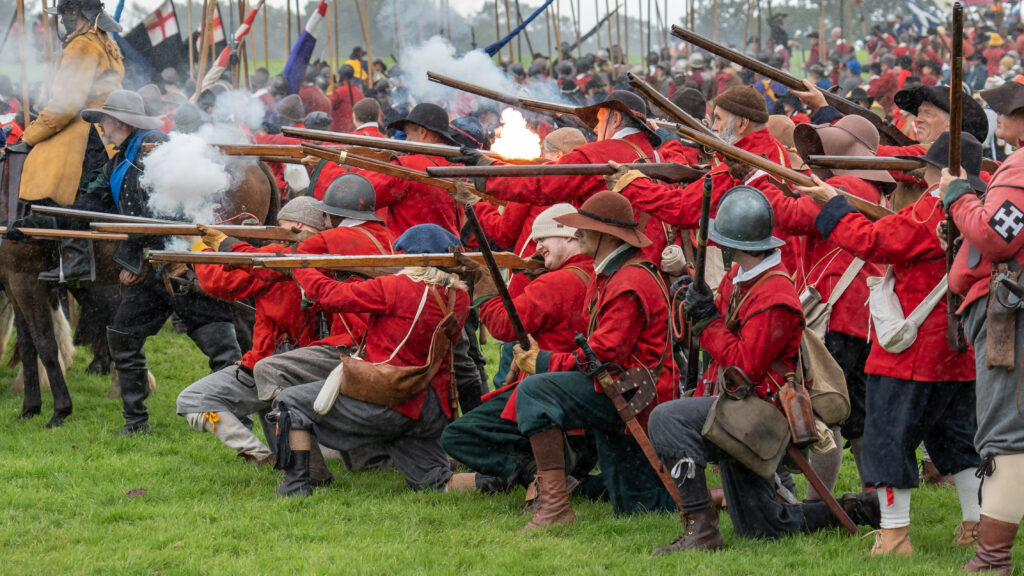
Photo: Daz’s Photography
It was here that any unity among the Parliamentarians fell apart. Relations between Manchester and Cromwell, his lieutenant of horse, had been deteriorating since the summer, but following Newbury this developed into a public spat. Cromwell and some of the army’s senior officers brought an indictment against the Earl, accusing him of “backwardness to all action” that claimed was caused by “some principle of unwillingness” to see the King brought “too low”.68 Manchester’s cousin Edward Montagu was amongst the accusers and claimed “that he heard the Earl of Manchester say that he was against this war in the beginning of it and that if those who began it had to do it again they would be twice advised”. Meanwhile, the Cambridgeshire Committee petitioned Parliament claiming it could no longer bear the cost of maintaining Manchester’s army while Norfolk implored him to return to East Anglia, so that it inhabitants could “be secured both from our enemies and these extraordinary and vast charge which have often fallen on us”. While most officers had returned to London by the end of November, Manchester remained with his men near Newbury, overseeing their move into winter quarters while keeping watch on the King.69
Manchester defended himself in the House of Lords but Parliament was now focusing on a bill for engineering the army into one capable of achieving total victory over the King. The Self Denying Ordinance prevented those holding political office from having military command and Sir Thomas Fairfax, who had commanded alongside Manchester to Winceby and Marston Moor, was appointed leader of “the army, newly modelled”. Although Manchestef’s men were riven by religious differences, the move was not wholly popular. 6 January, Captain Moses O’Neale of Manchester’s regiment of foot instigated a petition, signed by forty officers, in favour of Manchester continuing to lead.
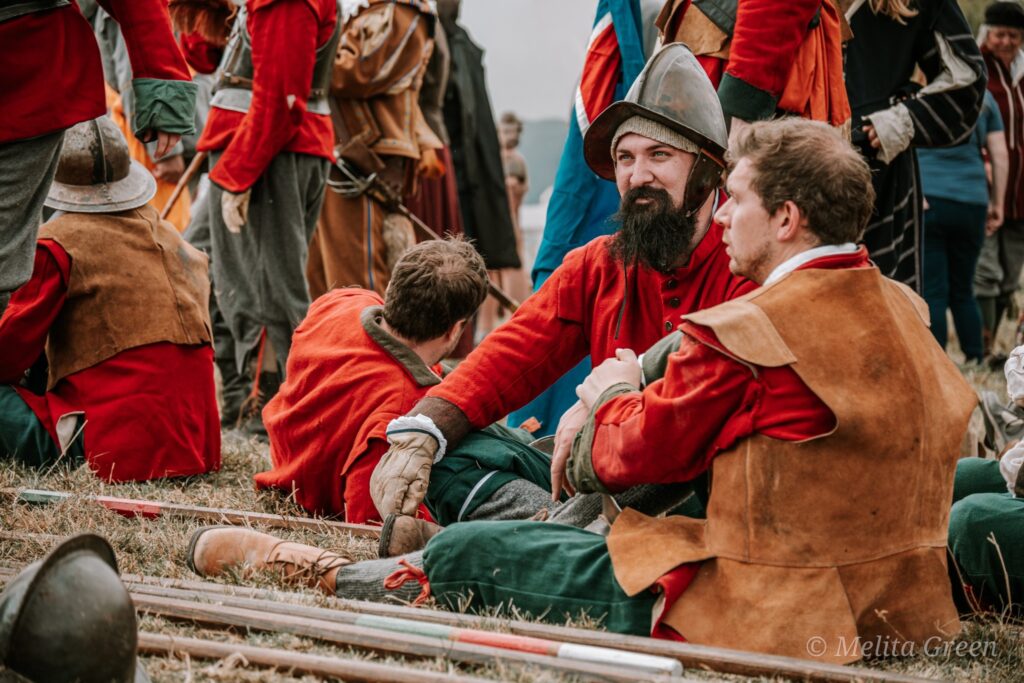
Photo: Mel Green
By this point, the regiment numbered 984 men and at the beginning of march the Committee of Both Kingdoms ordered Crawford to take his and Manchester’s regiments to assist Sir William Brereton against Prince Rupert in Cheshire, but he made it no further than Northampton. Manchester eventually resigned his commission on 2 April and the rank and file of his regiment were combined with those of the Earl of Essex’s regiment to form a new senior regiment for Fairfax, the army’s new commander. The majority of captains, and probably soldiers of Fairfax’s regiment came from Manchester’s own.70
Fairfax’s new regiment, referred to as the Lord General’s Regiment, would particularly distinguish itself in breaking the last of the Royalist infantry at the Battle of Naseby two months later. They went on to fight in the Western campaign and served at the sieges of Oxford and Wallingford. At the start of the Second Civil War in 1648, the regiment were sent North by Fairfax, joining John Lambert, then Cromwell, for the Battle of Preston, while some of them would have been at the gruelling siege of Colchester, where gunner Nathaniell Bennett perished. In 1650, with Fairfax’s resignation as Lord General, the regiment passed again to Cromwell and fought with distinction at the decisive battle at Dunbar in Scotland. Regicide and Major General William Goffe was promoted to colonel in place of Cromwell and led the regiment until 1655, when it probably reverted back to Cromwell. Men from the regiment served as marines with the fleet during the First Anglo-Dutch War of 1652–1654. Goffe was re-appointed as colonel in 1658 but he was replaced by the radical Edmund Ludlow, Herbert Morley MP and then, during the Restoration crisis of 1660, Henry Mordaunt the second Earl of Peterborough.71
The regiment was finally disbanded in November 1660 at Reading.
We know the names and deeds of so few of the ordinary soldiers who served with the Earl of Manchester. Many of his men would have gone on to see almost two decades of warfare, marching hundreds of miles, risking death on a daily basis, and enduring and committing unspeakable trauma. These were men like Daniel Redman, Thomas Higharne, Nathaniell Bennett and his brother, Robert Johnson, Henry Archibald, Henry King, Richard Ellsing, Danyell Emming, and John Hind — all of them briefly appearing in the records because of their deeds or their hurts. Although those who died, fell sick, deserted, or were injured would have been replaced, the regiment would have retained a core of soldiers who lived and fought all the way through this incredible period of history, from bombarding the walls of Royalist King’s Lynn to standing guard as King Charles’ son returned to the throne.
Michael Molcher

Bibliography
John Bruce & David Masson, The Quarrel Between the Earl of Manchester and Oliver Cromwell (1875)
Dom Bede Camm, Forgotten shrines: an account of some old Catholic halls and families in England, and of relics and memorials of the English martyrs (1910)
Edward Davis, Cromwell’s Nemesis: The Life of Edward Montagu, Second Earl of Manchester 1602-1672 (2025)
C. H. Firth, ‘Marston Moor’ from Transactions of the Royal Historical Society, Vol. 12 (1898)
Aaron Graham, ‘The Earl of Essex and Parliament’s Army at the Battle of Edgehill: A Reassessment’ (2010)
Clive Holmes, The Eastern Association in the English Civil War (1974)
Simon Marsh, ‘British Civil War Field Words and Field Signs – An Initial Hand List ’ from Battalia: The Journal of the Battlefields Trust
Stuart Peachey & Les Prince, ECW Flags and Colours 1: English Foot (1991)
Laurence Spring, Campaigns of the Eastern Association: The Rise of Oliver Cromwell (2022)
Peter Wenham, The Great and Close Siege of York, 1644 (1970)
Please address all comments/corrections to earlofmanchesterspr@gmail.com
 Footnotes
1 John Bruce & David Masson, The Quarrel Between the Earl of Manchester and Oliver Cromwell, p13
2 Edward Davis, Cromwell’s Nemesis: The Life of Edward Montagu, Second Earl of Manchester 1602-1672, p237
3 Davis, p203
4 Clive Holmes, The Eastern Association in the English Civil War, p167-8
5 Aaron Graham. The Earl of Essex and Parliament’s Army at the Battle of Edgehill: A Reassessment. War in History
6 https://wiki.bcw-project.org.uk/parliamentarian/foot-regiments/lord-mandeville
7 Coat colour noted in Stuart Peachey & Les Prince, ECW Flags and Colours 1: English Foot
8 Davis, p203
9 Davis, p193-6
10 https://www.civilwarpetitions.ac.uk/petition/the-petition-of-katherin-milborne-residence-unknown-10-december-1642/
11 Laurence Spring, Campaigns of the Eastern Association: The Rise of Oliver Cromwell, 1642-1645, p37
12 https://www.civilwarpetitions.ac.uk/petition/the-petition-of-thomas-higharne-of-coggeshall-essex-1646/
13 Spring, p76
14 Holmes, p164
15 Spring, p13
16 Davis, p237
17 Spring, p72
18 Spring, p72
19 Holmes, p164-5
20 Holmes, p167-8
21 https://the-past.com/feature/kings-lynn-under-siege-how-a-small-field-in-north-lynn-illuminated-civil-war-fortress-engineering/
22 https://www.civilwarpetitions.ac.uk/petition/the-petition-of-frances-bennett-residence-unknown-1-august-1648/
23 So disabled that he could not work, the Essex authorities awarded Butcher a £4 annual pension https://www.civilwarpetitions.ac.uk/petition/the-petition-of-thomas-butcher-of-langham-essex-1657/
24 Davis, p241
25 Davis, p256
26 Spring, p74-5
27 Holmes, p98
28 C. H. Firth, ‘Marston Moor’ from Transactions of the Royal Historical Society, Vol. 12 (1898), pp. 17-79
29 A true Relation of the Taking of the City, Minster, and Castle of Lincoln — by the Right Honourable the Earl of Manchester on Monday the sixth of this instant May together with a list of the names of the Commanders. London, printed by R. Cotes for Job Bellamy, published 1644
30 Davis, p325
31 DH Allen, Essex Quarter Sessions Order Book, 1652-1661, p93 – quoted in Spring p68
32 Spring, p68
33 Spring, p75
34 Firth, p29
35 Wenham, p35
36 Spring, p78
37 Wenham, p46
38 Wenham, p41
39 Wenham, p39
40 Disabled and unable to work, Ellsing received little ‘poor relief’ from his parish, which was overburdened by both the needy and high taxes imposed by the Easter Association. His petition to the county asking for assistance had no less than twenty endorsers and he received a pension of £3 https://www.civilwarpetitions.ac.uk/petition/the-petition-of-richard-ellsing-of-helions-bumpstead-essex-1646/
41 After also losing one of their sons in Cromwell’s invasion of Ireland, Emming’s widow Martha appealed to the Essex authorities for help in 1653 and received a forty shilling gratuity https://www.civilwarpetitions.ac.uk/petition/the-petition-of-martha-emming-of-coggeshall-essex-1653/
42 Spring, p120-1
43 Wenham, p76
44 Spring, p84
45 Spring, p84
46 Wenham, p131
47 Firth, p29
48 Spring, p85
49 Spring, p89
50 Firth, p29
51 Simon Marsh, ‘British Civil War Field Words and Field Signs – An Initial Hand List ’ from Battalia: The Journal of the Battlefields Trust, p28
52 Spring, 107-9
53 Firth, p66
54 Wenham, p100
55 Spring, p136
56 Holmes, p148
57 https://www.civilwarpetitions.ac.uk/payments/john-hind-residence-unknown-army-committee-and-military-commanders-payments-london-13-october-1644/
58 https://www.civilwarpetitions.ac.uk/petition/the-petition-of-george-hancocke-clerk-to-captain-dennis-taylors-company-20-september-1644/
59 Spring, p140
60 Davis, p360
61 Spring, 142
62 Spring, p143
63 Boys was quickly knighted and promoted to colonel by the King for his resistance.
64 https://www.battlefieldstrust.com/resource-centre/battleview.asp?BattleFieldId=89
65 Spring, p151
66 Davis, p380
67 Davis, p386
68 Bruce & Mason, lvi
69 Davis, p386-7
70 Spring, p189
71 https://wiki.bcw-project.org.uk/new-model-army/foot-regiments/sir-thomas-fairfax