The latest news from the Earl of Manchester’s Regiment…
Follow our blog for up-to-date information on our events, discover more about the fascinating history of the English Civil Wars, and get the chance to meet some of our members…
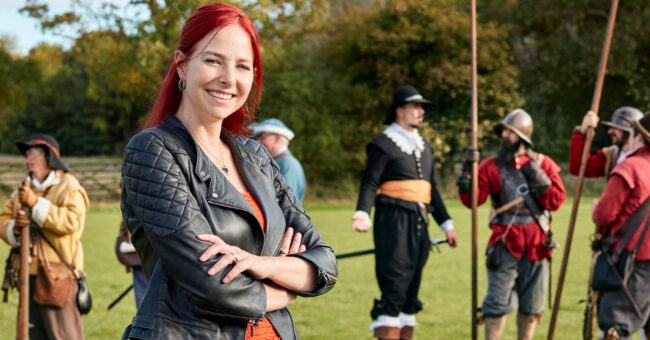
Watch us teach Alice Roberts how to fire a musket! Back before the pandemic, members of the Sealed Knot gathered at a location outside of Oxford to help Professor Alice Roberts uncover the Civil War history of King Charles’ wartime capital — and it got explosive! In Britain’s Most Historic Towns, Professor Roberts studies a key…
Details
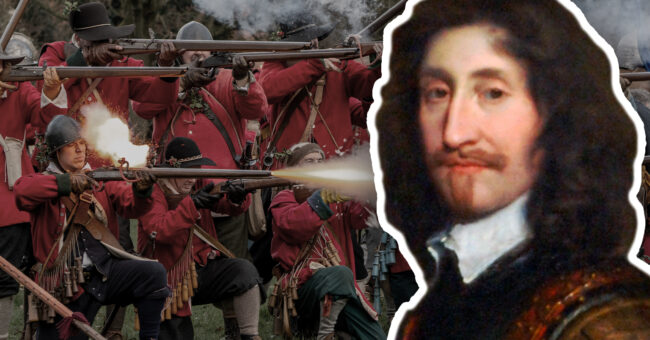
Tracking the movements of a single body of soldiers, never mind individuals, through the chaos and carnage of the British Civil Wars can be a challenge to even the most dedicated of historians. While we might know the names and accomplishments of their officers, the common soldier often remains nameless, faceless, and voiceless, which leaves…
Details
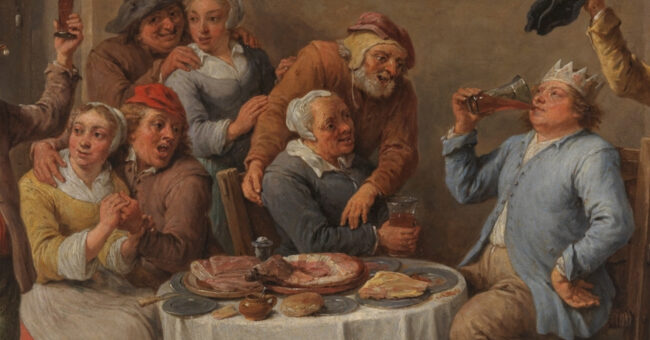
In the 17th Century, Christmas Day was more than just a religious date – it marked the beginning of the traditional Twelve Days of Christmas between Christmas and Epiphany Eve, commonly called ‘Twelfth Night’. We may know it from the much later song, but for people in Stuart England it was a highlight of the…
Details
Manchester’s after winning the Rosebowl for ‘Best Regiment’ at Nantwich in January 2024 While we reenact a regiment from the English Civil Wars, the modern incarnation of The Earl of Manchester’s Regiment of Foote has its own history and identity. Numbering over a hundred members, Manchester’s is a Parliamentarian regiment within The Sealed Knot reenactment…
Details
With musket on her shoulder, her part she acted then, And everyone supposed that she had been a man; Her bandeliers about her neck and sword hang’d by her side, In many brave adventures her valour has been tried The Gallant She-Soldier (1655) In the past the role of women in the English Civil…
Details
Today – November 20th – is ‘Equal Pay Day’ in the UK. This is the day when, because of the gap between the average man’s salary, and the average woman’s salary, overall women stop being paid in comparison to men. To put it a different way: thanks to the gender pay gap, women effectively work…
Details
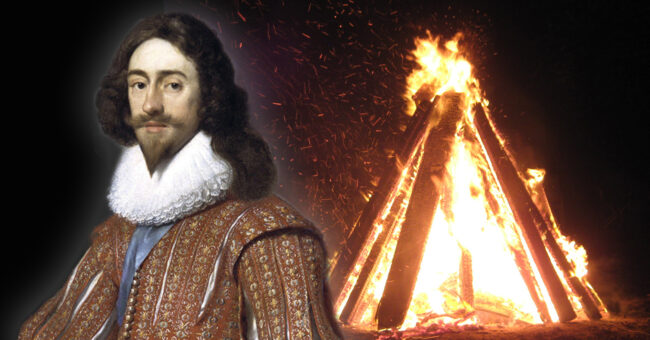
Bonfires, fireworks, music, celebrations – these are the hallmarks of a fun Bonfire Night, held every fifth of November (or, more conveniently, the nearest Saturday) to mark the foiling of the infamous Gunpowder Plot to blow up Parliament in 1605. And, with them, comes the traditional rhyme: Remember, remember, the 5th of November, Gunpowder, treason…
Details
Chastleton House is a delight for anyone interested in history, let alone 17th Century history. The Jacobean country house near Moreton-in-Marsh in Oxfordshire was built between 1607 and 1612 for Walter Jones (born 1550), whose family’s success in the wool business allowed him to make his fortune from the law – he rose from being the town clerk…
Details
Download free English Civil War teaching packs With schools closed as part of the coronavirus lockdown, many parents will be home-schooling for the first time. To support those families looking for educational lockdown activities, the first two of four FREE teaching packs are available to download from the Manchester’s website now. The packs will support…
Details
“Fit for trading” Susan Hill, the first wife of Edward Montagu How the marriage of an inn-keeper’s daughter and a future earl reveals the rich trade in wives and titles in the last days of the court of James VI/I In 1623, a satirical poem called “Heaven Blesse King James Our Joy” launched a…
Details
The Thirty Years War was one of the most destructive wars in European history – a vicious struggle between 1618 and 1648 which devastated large parts of the Continent. Part of the European Wars of Religion, it began when the Holy Roman Emperor Ferdinand II of Bohemia attempted to curtail the religious activities of his subjects, sparking…
Details
While most people associate the Sealed Knot with massed battles, we also spend a lot of time looking into and reenacting the lives of ordinary people from the 17th Century. Our living history encampments are an ideal opportunity to practice traditional crafts such as sewing, weaving, leather-working, woodturning and many more, jobs that weren’t necessarily…
Details
On the cold morning of 21st December 1643, a group of men marched into the ornate chapel of Peterhouse, the oldest university college in Cambridge. In the presence of the college’s president, fellows and other dignitaries, they began to smash, pull down, and deface religious imagery on the walls and pews. Statues of two…
Details
The Treaty Against a King: The 1643 Solemn League and Covenant What was the document, signed on 25 September 1643, that brought two nations together in arms against their shared king? The Solemn League and Covenant was an agreement between Parliament and the Scots to unite in opposition to King Charles I during the First English Civil…
Details
‘Where England’s sorrows began’: The Battle of Powick Bridge A daring raid on a convoy laden with treasure, a dashing young prince charging to the rescue, the opening salvo of a war between King and Parliament that would end on virtually the same ground – what was the Battle of Powick Bridge? While the Battle of…
Details